1
/
of
1
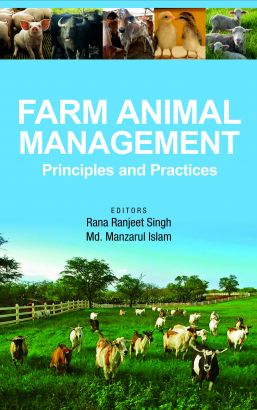
Farm Animal Management: Principles and Practices
Farm Animal Management: Principles and Practices
Regular price
$146.22 USD
Regular price
$243.70 USD
Sale price
$146.22 USD
Unit price
/
per
Couldn't load pickup availability
Best Seller: #1 in Popular Products!
Fast Shipping
24/7 support
30 days return
Author : Rana Ranjit Singh & Md. Manzarul Islam
Pages : 583
Year of Publication : 2014
Language : English
Binding : Hardback
Livestock rearing has long been an essential element of India's socio-economic structure. As a significant part of the agricultural sector, it serves multiple purposes, including achieving nutritional security, creating employment opportunities, and promoting socio-economic development in rural areas, particularly among landless, small, and marginal farmers, as well as women. India has a substantial livestock population with varying productive capabilities, distributed across different agro-ecological zones and different operational and livestock holding sizes. Consequently, different management practices are required for their effective handling. Moreover, challenges posed by changing development drivers and climate change necessitate specialized management strategies. Effective farm animal management involves the comprehensive and precise application of fundamental scientific principles related to breeding, feeding, housing, and disease control, both in general and in specific situations. To address these concerns, this book provides a comprehensive overview of all aspects of livestock management, including basic and applied principles. The syllabus for veterinary science and animal husbandry programs has been reorganized, and this book has been divided into 15 chapters that cover almost every aspect of livestock production management.
Pages : 583
Year of Publication : 2014
Language : English
Binding : Hardback
Livestock rearing has long been an essential element of India's socio-economic structure. As a significant part of the agricultural sector, it serves multiple purposes, including achieving nutritional security, creating employment opportunities, and promoting socio-economic development in rural areas, particularly among landless, small, and marginal farmers, as well as women. India has a substantial livestock population with varying productive capabilities, distributed across different agro-ecological zones and different operational and livestock holding sizes. Consequently, different management practices are required for their effective handling. Moreover, challenges posed by changing development drivers and climate change necessitate specialized management strategies. Effective farm animal management involves the comprehensive and precise application of fundamental scientific principles related to breeding, feeding, housing, and disease control, both in general and in specific situations. To address these concerns, this book provides a comprehensive overview of all aspects of livestock management, including basic and applied principles. The syllabus for veterinary science and animal husbandry programs has been reorganized, and this book has been divided into 15 chapters that cover almost every aspect of livestock production management.
Share