1
/
of
1
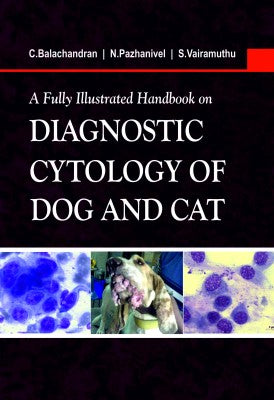
A Fully Illustrated Handbook on Diagnostic Cytology of Dog and Cat
A Fully Illustrated Handbook on Diagnostic Cytology of Dog and Cat
Regular price
$75.13 USD
Regular price
$125.22 USD
Sale price
$75.13 USD
Unit price
/
per
Couldn't load pickup availability
Author : C.Balachandran, N.Pazhanivel &.S.Vairamuthu
Pages : 130
Year of Publication : 2025
Language : English
Binding : Hardback
The diagnostic methodologies of clinical examination, radiographic evaluation, and laboratory data may not always confirm a diagnosis. In such cases, cytology proves to be a crucial tool in confirming disease processes or conditions. Presently, there is a need for less invasive and cost-effective methods for tumor diagnosis (Sangha et al., 2011). The success of cytological diagnosis relies on the collection of appropriate representative cells, specimen preparation, and processing, as well as the interpretation of smears, which are all interdependent procedures (Roszel, 1981; Lumsden and Baker, 2000). The arrangement of neoplastic cells within tissue is critical for determining the diagnosis of various types of tumors, evaluating surgical margins, and distinguishing between benign and malignant tumors (Stirtzinger, 1988). The role of cytology as a diagnostic tool in veterinary medicine is continuously developing and expanding, establishing itself as a reliable, minimally invasive method for obtaining a tissue diagnosis over the last two decades. As clinicians increase their use of diagnostic techniques and cytopathologists gain experience with a wider range of lesions, tissue samples, disease processes, and accuracy of the diagnosis must be improved (Meinkoth and Cowell, 2002). Cytology serves as a screening diagnostic tool, classifying lesions as inflammatory, hyperplastic, or neoplastic. An experienced cytologist can definitively diagnose specific neoplasms, provide tentative diagnoses for various types of tumors, identify sites of tumor metastasis, and monitor tumor regrowth following anticancer therapy. Information obtained from cytology may prove useful in establishing a diagnosis, determining a prognosis, and formulating a diagnostic or therapeutic plan.
Pages : 130
Year of Publication : 2025
Language : English
Binding : Hardback
The diagnostic methodologies of clinical examination, radiographic evaluation, and laboratory data may not always confirm a diagnosis. In such cases, cytology proves to be a crucial tool in confirming disease processes or conditions. Presently, there is a need for less invasive and cost-effective methods for tumor diagnosis (Sangha et al., 2011). The success of cytological diagnosis relies on the collection of appropriate representative cells, specimen preparation, and processing, as well as the interpretation of smears, which are all interdependent procedures (Roszel, 1981; Lumsden and Baker, 2000). The arrangement of neoplastic cells within tissue is critical for determining the diagnosis of various types of tumors, evaluating surgical margins, and distinguishing between benign and malignant tumors (Stirtzinger, 1988). The role of cytology as a diagnostic tool in veterinary medicine is continuously developing and expanding, establishing itself as a reliable, minimally invasive method for obtaining a tissue diagnosis over the last two decades. As clinicians increase their use of diagnostic techniques and cytopathologists gain experience with a wider range of lesions, tissue samples, disease processes, and accuracy of the diagnosis must be improved (Meinkoth and Cowell, 2002). Cytology serves as a screening diagnostic tool, classifying lesions as inflammatory, hyperplastic, or neoplastic. An experienced cytologist can definitively diagnose specific neoplasms, provide tentative diagnoses for various types of tumors, identify sites of tumor metastasis, and monitor tumor regrowth following anticancer therapy. Information obtained from cytology may prove useful in establishing a diagnosis, determining a prognosis, and formulating a diagnostic or therapeutic plan.
Share