1
/
of
1
A Handbook of Technology Transfer
A Handbook of Technology Transfer
Regular price
$76.07 USD
Regular price
$126.78 USD
Sale price
$76.07 USD
Unit price
/
per
Couldn't load pickup availability
Author : Kashmir Singh, Nishika, Ravneet Kaur & Adti Chauhan
Pages : 340
Year of Publication : 2026
Language : English
Binding : Hardback
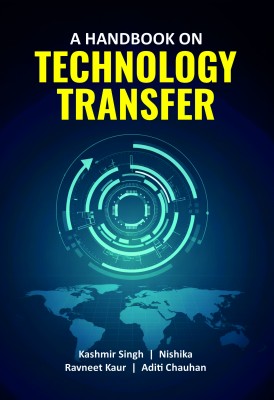
A Handbook on Technology Transfer is a comprehensive guide to how ideas, inventions, and research outputs can move from classrooms and laboratories into the marketplace. It explains how academic and research institutions can play a central role in shaping innovation ecosystems, creating not just knowledge but also tangible products, services, and enterprises that impact society. The book begins by clarifying the concepts, needs, and impact of technology transfer, particularly for higher education institutions that are increasingly expected to contribute directly to industry, startups, and public policy. It highlights why universities must evolve from being centers of knowledge creation to becoming active partners in national development and global competitiveness. A major focus of the handbook is on building institutional mechanisms, especially the Technology Transfer Office (TTO). Readers are guided through practical steps of establishing and managing TTOs, including organizational design, intellectual property management, revenue sharing, and aligning institutional priorities with innovation goals. The book also provides a clear overview of intellectual property rights (patents, copyrights, trademarks, designs, and plant varieties) and explains how they support commercialization. Moving further, it explores licensing models, spin-outs, and start-ups, showing how research can be transformed into entrepreneurial ventures and industrial solutions. Another highlight is the coverage of policy and programmatic support in India, with discussions of Startup India, Atal Innovation Mission, BIRAC, incubators, and research parks. These initiatives are mapped to different stages of technology readiness, offering readers practical insights into how government support complements institutional efforts. By emphasizing the role of multiple stakeholders faculty, students, industry, investors, and government agencies the book portrays technology transfer as a collective process that thrives on networks and partnerships. It also candidly examines the challenges and gaps in India's system while suggesting opportunities for future growth through digital platforms, sector-specific programs, and global collaboration. Accessible, structured, and practical, this handbook is equally useful for researchers, students, policymakers, entrepreneurs, and institutional leaders. It can be read as a reference guide, a teaching resource, or a roadmap for building strong innovation and technology transfer systems in India and beyond.
Pages : 340
Year of Publication : 2026
Language : English
Binding : Hardback
A Handbook on Technology Transfer is a comprehensive guide to how ideas, inventions, and research outputs can move from classrooms and laboratories into the marketplace. It explains how academic and research institutions can play a central role in shaping innovation ecosystems, creating not just knowledge but also tangible products, services, and enterprises that impact society. The book begins by clarifying the concepts, needs, and impact of technology transfer, particularly for higher education institutions that are increasingly expected to contribute directly to industry, startups, and public policy. It highlights why universities must evolve from being centers of knowledge creation to becoming active partners in national development and global competitiveness. A major focus of the handbook is on building institutional mechanisms, especially the Technology Transfer Office (TTO). Readers are guided through practical steps of establishing and managing TTOs, including organizational design, intellectual property management, revenue sharing, and aligning institutional priorities with innovation goals. The book also provides a clear overview of intellectual property rights (patents, copyrights, trademarks, designs, and plant varieties) and explains how they support commercialization. Moving further, it explores licensing models, spin-outs, and start-ups, showing how research can be transformed into entrepreneurial ventures and industrial solutions. Another highlight is the coverage of policy and programmatic support in India, with discussions of Startup India, Atal Innovation Mission, BIRAC, incubators, and research parks. These initiatives are mapped to different stages of technology readiness, offering readers practical insights into how government support complements institutional efforts. By emphasizing the role of multiple stakeholders faculty, students, industry, investors, and government agencies the book portrays technology transfer as a collective process that thrives on networks and partnerships. It also candidly examines the challenges and gaps in India's system while suggesting opportunities for future growth through digital platforms, sector-specific programs, and global collaboration. Accessible, structured, and practical, this handbook is equally useful for researchers, students, policymakers, entrepreneurs, and institutional leaders. It can be read as a reference guide, a teaching resource, or a roadmap for building strong innovation and technology transfer systems in India and beyond.
Share