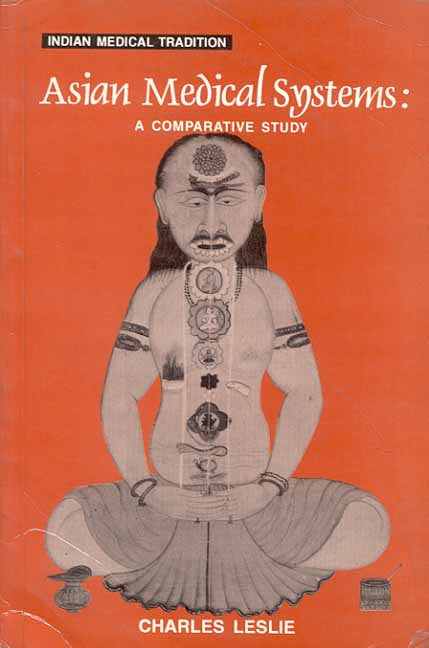
Asian Medical Systems: A Comparative Study
Asian Medical Systems: A Comparative Study
Hardcover
Couldn't load pickup availability
DETAILS :
- Author : Charles Leslie
- Publisher : Motilal Banarsidass
- Publication date : January 1, 1998
- Edition : 1st
- Language : English
- Hardcover : 419 pages
- ISBN-10 : 812081536X
- ISBN-13 : 978-8120815360
- Item Weight : 850 g
ABOUT THE BOOK
Asian Medical Systems: A Comparative Study, edited by Charles Leslie, is a seminal work in the field of medical anthropology. This book was one of the first to provide a sophisticated, scholarly comparison of the great "literate" medical traditions of Asia—specifically Ayurveda, Traditional Chinese Medicine, and Unani—alongside modern cosmopolitan medicine.
The volume challenges the then-prevailing view that traditional systems were mere "folk medicine" or superstitions. Instead, it presents them as complex, rationalized, and professionalized systems with their own deep philosophical foundations. The contributors explore how these systems have adapted to modernization, their internal logic of health and disease, and their relationship with the state. By treating "Western" medicine as just another cultural system, Leslie and his colleagues opened the door for a truly global and pluralistic understanding of healthcare.
ABOUT THE AUTHOR
Charles Leslie (1923–2009) was a pioneer of medical anthropology and a Professor Emeritus at the University of Delaware. He is widely credited with establishing the comparative study of medical systems as a legitimate academic discipline. His fieldwork, particularly in India, focused on the "revivalism" of indigenous medicine and how traditional practitioners navigated the rise of modern science. Leslie was known for his critical yet empathetic lens, always seeking to understand how culture shapes the way humans experience illness and healing.
Share