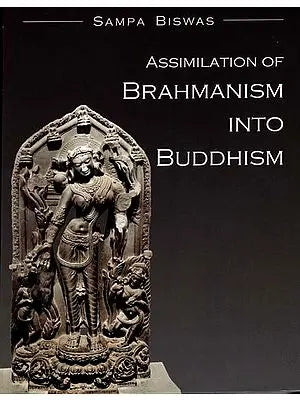
Assimilation of Brahmanism into Buddhism
Assimilation of Brahmanism into Buddhism
Hardcover
Couldn't load pickup availability
DETAILS :
- Author : Sampa Biswas
- Publisher : D.K. Print World Ltd
- ISBN : 9788124609286
- Language : English
- Hardcover : 270 pages
- Item Weight : 1000 g
ABOUT THE BOOK
Assimilation of Brahmanism into Buddhism, authored by Sampa Biswas, is an intensive historical and theological exploration of the complex, symbiotic relationship between two of India’s most influential religious traditions. The book challenges the popular narrative of Buddhism as a purely reactionary or isolated movement, instead arguing that it evolved through a deep and continuous dialogue with the prevailing Brahmanical (early Hindu) framework. Biswas meticulously examines how Buddhist thought integrated and reinterpreted core Brahmanical concepts—such as the laws of Karma, the structure of the cosmos, and the practice of Yoga—transforming them into tools for the realization of Nirvana while maintaining a distinct philosophical identity.
The narrative focuses on the transition from the early ascetic teachings of the Buddha to the more ritualistic and iconographic developments of later Mahayana and Vajrayana Buddhism. Biswas highlights how Vedic deities like Indra and Brahma were absorbed into the Buddhist pantheon as protectors of the Dharma, and how Brahmanical sacrificial rituals were sublimated into internal meditative practices. By analyzing archaeological evidence, epigraphs, and textual sources from both traditions, the book illustrates the "middle ground" where these two paths blurred, ultimately contributing to the unique synthesis that defined the cultural and religious landscape of medieval India and Southeast Asia.
ABOUT THE AUTHOR
Dr. Sampa Biswas is a distinguished scholar of ancient Indian history and religious studies, recognized for her nuanced approach to the evolution of socio-religious institutions. Her research often focuses on the "borderlands" of faith, where different ideologies intersect and influence one another. With a deep command of Sanskrit and Pali literature, she is known for providing balanced perspectives that avoid the sectarian biases often found in older historical works. Her academic contributions are valued for bridging the gap between historical fact and philosophical inquiry, making her a respected voice in the study of India’s intellectual heritage.
Share