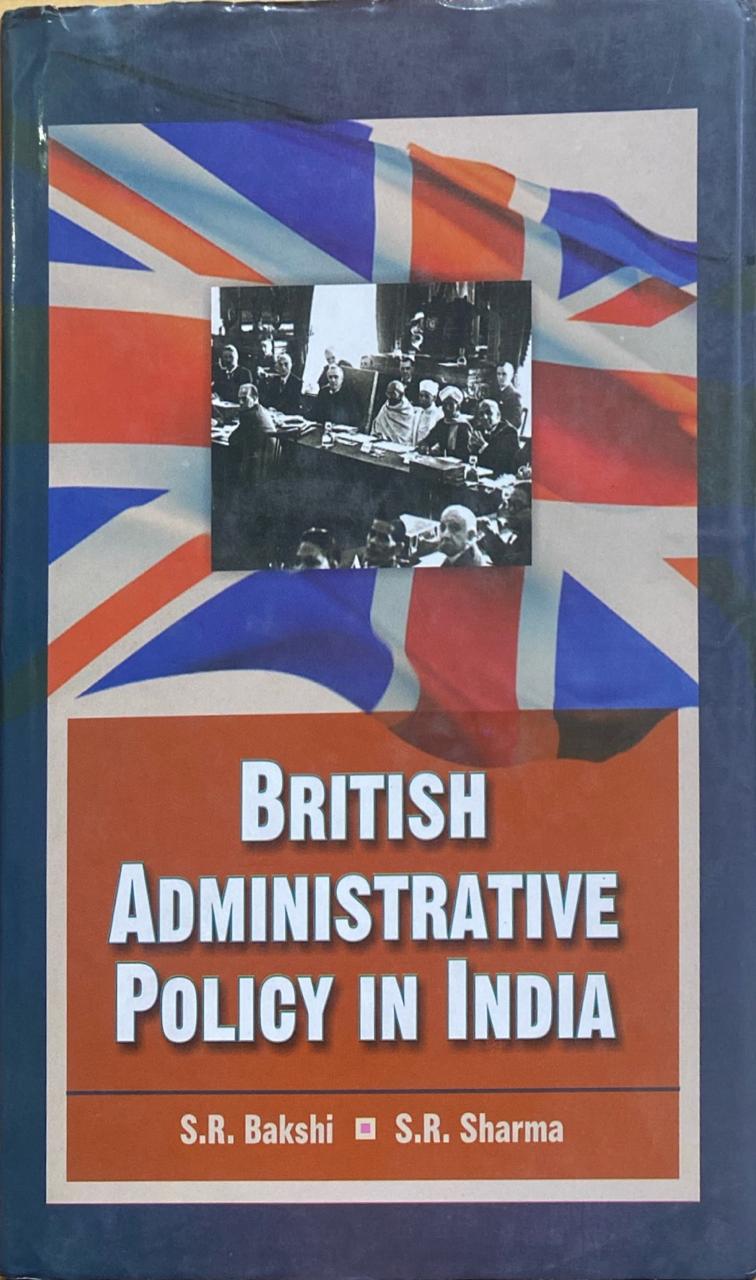
British Administrative Policy In India
British Administrative Policy In India
Hardcover
Couldn't load pickup availability
DETAILS :
- Author : S R Bakshi
- Publisher : Sublime Publications
- Publication date : 1 January 2009
- Language : English
- Print length : 360 pages
- ISBN-10 : 8181921542
- ISBN-13 : 978-8181921543
- Item Weight : 600 g
ABOUT THE BOOK
British Administrative Policy in India, authored by the highly prolific historian and archival researcher Dr. S. R. Bakshi, is a thorough institutional and political examination of the governance frameworks that shaped the British Raj. Published within specialized historical research lines (such as Anmol Publications), this landmark volume serves as a core reference work for postgraduate history scholars, civil services aspirants, and researchers of South Asian colonial administration. The core philosophy of this text centers on bureaucratic subjection and economic drain—proving that every administrative reform, legislative act, and institutional restructuring undertaken by the British Crown was systematically engineered to consolidate imperial control and maximize resource extraction rather than foster genuine indigenous development.
ABOUT THE AUTHOR
Dr. S. R. Bakshi is an elite Indian historian, archivist, and author with a massive research footprint in the Indian freedom movement, national leaders, and colonial administrative systems. Known for his meticulous reliance on primary sources, including official British parliamentary papers, viceregal correspondences, and national archive records, his manuals are reference standards for history faculties nationwide.
Dr. Bakshi’s authorial and analytical style is exceptionally institutional, systematic, and critical. Writing with the precision of a historical archivist, he cuts through colonial rhetoric of "benevolent assimilation" to expose the real-world friction points of imperial execution, heavy taxation, and bureaucratic self-preservation. His prose runs at a steady, academically demanding pace, using structured narrative transitions instead of fragmented bulleted lists to link macro policy initiatives to their ground-level impact on Indian society. By balancing structural analysis with exhaustive documentary evidence, his text remains an indispensable national benchmark for university libraries and modern South Asian history researchers worldwide.
Share