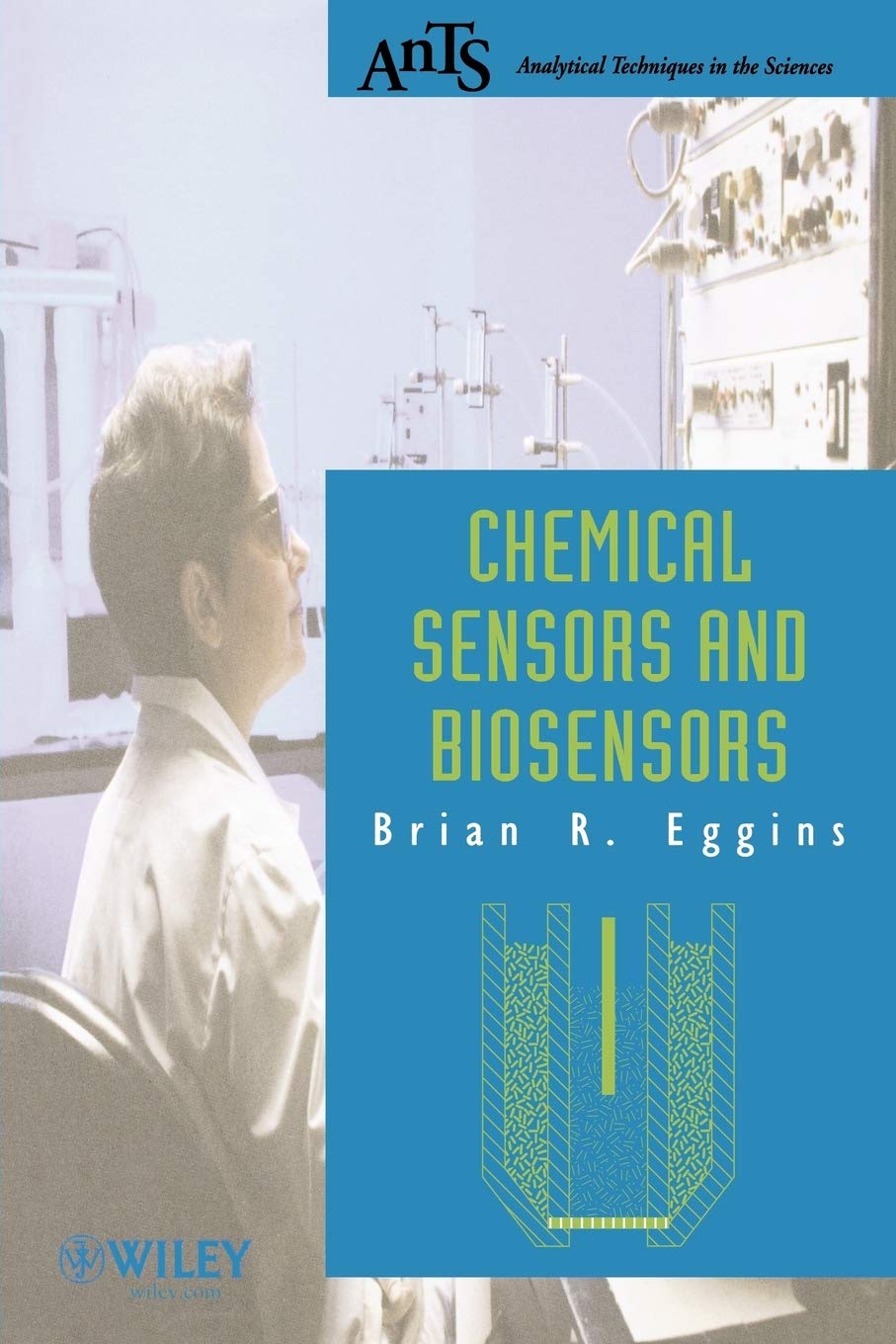
Chemical Sensors and Biosensors
Chemical Sensors and Biosensors
Hardcover
Couldn't load pickup availability
DETAILS :
- Author: Brian R. Eggins
- Publisher: Wiley India Pvt Ltd
- Publication date: 28 January 2010
- Language: English
- Print length: 298 pages
- ISBN-10: 8126524758
- ISBN-13: 978-8126524754
- Item Weight: 500 g
ABOUT THE BOOK
Chemical Sensors and Biosensors, authored by the distinguished analytical chemist Dr. Brian R. Eggins, is an authoritative, foundational masterwork in the field of electrochemical and optical sensing technologies. Published by John Wiley & Sons as part of their acclaimed Analytical Techniques in the Sciences (AnTS) series, this comprehensive textbook bridges the gap between fundamental physical chemistry and practical, real-world analytical applications. The core philosophy of this text centers on structural operational principles, explaining how chemical interactions can be reliably transduced into quantifiable electrical or optical signals. Dr. Eggins treats sensing technology not merely as an abstract laboratory curiosity, but as a high-stakes, rapidly evolving branch of science vital for modern medicine, environmental monitoring, and industrial process control.
The volume is structurally organized into a progressive sequence of chapters that methodically break down sensor architecture, design considerations, and performance characteristics. It begins by establishing core definitions, distinguishing between chemical sensors (which use artificial receptors) and biosensors (which exploit highly specific biological elements like enzymes, antibodies, or DNA). The middle sections provide an exhaustive analytical breakdown of transduction mechanisms:
- Electrochemical Sensors: Potentiometric devices (like the classic glass pH electrode and ion-selective electrodes), amperometric systems (including oxygen electrodes and modern microelectrodes), and voltammetric mechanisms.
- Photometric and Optical Sensors: Fiber-optic sensors (optodes), surface plasmon resonance (SPR) devices, fluorescence, and chemiluminescence arrays.
- Mass-Sensitive and Thermal Sensors: Piezoelectric quartz crystal microbalances (QCM) and calorimetric thermistor devices.
The final third of the textbook shifts focus to the biological interface of biosensors, detailing enzyme kinetics ($Michaelis-Menten$ pathways), tissue-based sensing, immunosensors, and genetic "gene-chip" arrays. Rather than presenting pure chemical theory, the book concludes with high-utility, real-world application profiles detailing how these sensors are deployed for blood glucose monitoring in diabetic patients, real-time pollution tracking in wastewater management, and defense-sector biosecurity detection.
ABOUT THE AUTHOR
Dr. Brian R. Eggins was an elite British analytical chemist, senior academic, and researcher based at the University of Ulster, Northern Ireland, where he served as a pioneer in the development of electrochemical biosensors. He authored several seminal texts in the field, including Biosensors: An Introduction, and was widely respected for his research into modified electrodes, screen-printed sensor technologies, and environmental photocatalysis.
Dr. Eggins’ authorial and pedagogical style is exceptionally clear, precise, and highly instructional. Writing with the encouraging clarity of a veteran university professor, he systematically unpacks complex physical chemistry equations and electronics circuitry into digestible, step-by-step concepts. The text avoids overly dense engineering jargon in favor of clear schematic diagrams, labeled system layouts, and structured mathematical derivations. By balancing deep electrochemistry logic with highly accessible, modular summaries and end-of-chapter review problems, his literature remains an irreplaceable international gold standard for undergraduate chemistry students, biomedical engineering graduates, and corporate R&D scientists worldwide.
Share