1
/
of
1
Conservation Agriculture and Climate Change
Conservation Agriculture and Climate Change
Regular price
$125.71 USD
Regular price
$209.52 USD
Sale price
$125.71 USD
Unit price
/
per
Couldn't load pickup availability
Author : Ritesh Saha, Dhananjay Barman, Madhusudan Behera & Gouranga Kar
Pages : 496
Year of Publication : 2021
Language : English
Binding : Hardback
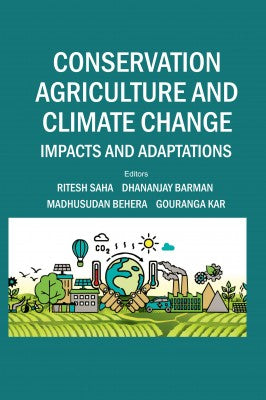
The use of conventional tillage and burning crop residues has led to the degradation of the soil resource base and intensified soil degradation, resulting in a decrease in crop production capacity. The exacerbating issue of global warming and greenhouse gas emissions has further compounded the problem. Conservation agriculture, on the other hand, has proven effective in mitigating the negative effects of conventional agriculture, such as soil erosion, soil organic matter decline, water loss, and soil physical degradation. Additionally, conservation agriculture promotes biodiversity in both natural and agro-ecosystems. By incorporating other good agricultural practices, such as the use of quality seeds and integrated pest, nutrient, and water management, conservation agriculture provides a solid foundation for sustainable intensification of the agricultural production system. Furthermore, yield levels in conservation agriculture systems are typically higher than those in traditional intensive tillage systems, with significantly lower production costs. This book offers a comprehensive exploration of climate change mitigation strategies, conservation agriculture approaches, and their impact on natural resource management.
Pages : 496
Year of Publication : 2021
Language : English
Binding : Hardback
The use of conventional tillage and burning crop residues has led to the degradation of the soil resource base and intensified soil degradation, resulting in a decrease in crop production capacity. The exacerbating issue of global warming and greenhouse gas emissions has further compounded the problem. Conservation agriculture, on the other hand, has proven effective in mitigating the negative effects of conventional agriculture, such as soil erosion, soil organic matter decline, water loss, and soil physical degradation. Additionally, conservation agriculture promotes biodiversity in both natural and agro-ecosystems. By incorporating other good agricultural practices, such as the use of quality seeds and integrated pest, nutrient, and water management, conservation agriculture provides a solid foundation for sustainable intensification of the agricultural production system. Furthermore, yield levels in conservation agriculture systems are typically higher than those in traditional intensive tillage systems, with significantly lower production costs. This book offers a comprehensive exploration of climate change mitigation strategies, conservation agriculture approaches, and their impact on natural resource management.
Share