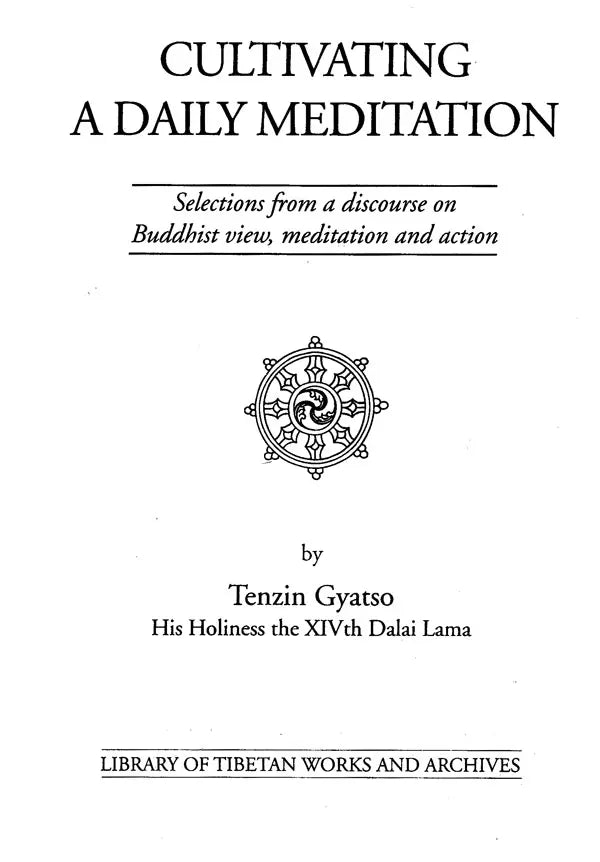
Cultivating a Daily Meditation
Cultivating a Daily Meditation
Paperback
Couldn't load pickup availability
DETAILS :
- Author : Dalai Lama XIV
- Illustrator : Kelsang Wangmo
- Publisher : Library of Tibetan Works & Archives
- Publication Date :30 September 1998
- Language : English
- Paperback : 150 pages
- ISBN-10 : 8185102791
- ISBN-13 : 9788185102795
- Item Weight : 250 g
ABOUT THE BOOK
"Cultivating a Daily Meditation" is a guide to establishing a consistent meditation practice. The book provides practical tips and techniques to help readers develop a daily habit of meditation, reducing stress and increasing mindfulness. It explores various meditation methods, making it accessible to both beginners and experienced practitioners. By incorporating meditation into daily life, readers can improve their mental clarity and overall well-being. This book is an excellent resource for those seeking to cultivate inner peace and calm. Regular meditation practice can lead to a more balanced and fulfilling life.
BACK OF THE BOOK
During April 1985 and then again in October 1986, His Holiness the Dalai Lama delivered a series a discourses on Buddhist view meditation and action.
The discourses and ensuing discussions were recoded at the time, and later prepared into an edited text of the encounter; the result of which is this book.
In his discourses His holiness touched upon all the essential points of the Buddadharma, and practice of meditation. He also goes into depth on how we should proceed in the effort to generate both the heart of compassion and the expansive view of emptiness, the Great Void in our daily life. In addition, the question and answer session that follow each talk make both inspirational and informative reading. Which often leads to issues that arise in the course of a layperson’s practise .
In a sense His Holiness discourses are principally a commentary on how one should proceed in order to cultivate a daily tantric meditational practise. The visualization used as the basis of the contemplation is that of Buddha and the four great Bodhisattvas: Avalokiteshvara, Manjushri, Vajrapani, and the female bodhisattva Arya Tara and explains the symbolic significance of these figures.
The picture that emerges from the totality of his Holiness exposition is that Buddhism in spite of its being labeled as religion is mainly a way of life programmed to ensure that we bring some happiness, peace, meaning and purpose into lives, and that we learn to live in harmony with the environment.
Share