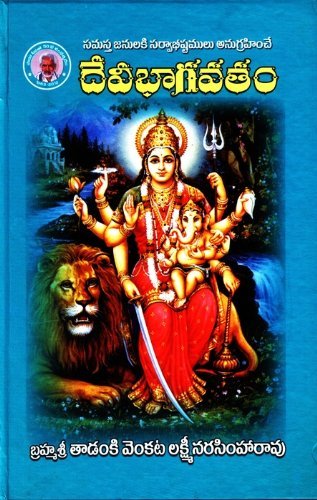
Devi Bhagavatam Telugu Edition | by T.V.L. Narsimharao
Devi Bhagavatam Telugu Edition | by T.V.L. Narsimharao
Hardcover
Couldn't load pickup availability
📦 Product Details
- Author: Tadanki Venkata Laksmi Narasimha Rao (T.V.L. Narsimharao)
- Publisher: J P Publications
- Publication Date: 1 January 2012
- Language: Telugu
- ISBN-10: 8192054020
- ISBN-13: 978-8192054025
- Item Weight: 850 g
📖 About the Book
Devi Bhagavatam is a revered Purana of the Shakta tradition, centered on the glory, manifestations, and worship of the Divine Mother. 🪷🙏
This Telugu edition presents the sacred teachings and narratives of the Devi Bhagavatam for Telugu-speaking readers. The text explores themes including devotion, dharma, creation, divine manifestations, spiritual wisdom, Goddess worship, and the nature of the Supreme Divine Mother. 📖✨
Filled with traditional stories, philosophical teachings, and devotional insights, this edition is suitable for readers interested in Hindu scriptures, Devi worship, Shaktism, Puranic literature, and Indian spiritual traditions.
✍️ About the Author
Tadanki Venkata Laksmi Narasimha Rao (T.V.L. Narsimharao) is associated with the Telugu edition of this important work, helping present the traditional teachings of the Devi Bhagavatam to Telugu-speaking readers. 📚🪷
His writing register avoids archaic, high-literary poetic meters (Kavya Bhasha) in favor of a fluent, warm, and story-driven style (Sarala Telugu). His continuous prose transitions beautifully from dramatic battle sequences to deep, emotional hymns of surrender. By creating a volume that feels right at home during daily family readings, temple festivals, or individual reflection, Narsimharao's work remains an absolute staple on the spiritual bookshelves of Andhra Pradesh and Telangana.
Share