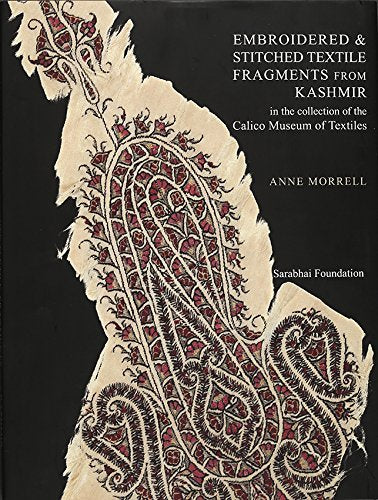
Embroidered & Stitched Textile Fragments from Kashmir
Embroidered & Stitched Textile Fragments from Kashmir
Hardcover
Couldn't load pickup availability
DETAILS:
- Author: Anne Morrell
- Publisher: Calico Museum of Textiles - Sarabhai Foundation
- Publication date: 1 January 2017
- Edition: First Edition
- Language: English
- Print length: 160 pages
- ISBN-10: 8186980555
- ISBN-13: 978-8186980552
- Item Weight: 2000 g
ABOUT THE BOOK
The publication ‘Embroidered & Stitched Textile Fragments from Kashmir’ shows fragments, a random collection, made up mainly of motifs from corners and ends of shawls and wraps. These date from the early 19th century to the mid 20th century. The development of techniques, particularly the use of stitch and embroidery, along with the woven fabric, develops through this period as a way of reducing time and costs producing the product. Examples range from the use of stitch to attach embroidered fabric to woven fabric, to embroidered motifs that are sometimes the same back and front. Some of the workmanship is incredible, and the quality the like of which we rarely see today.
Embroidered and Stitched Textile Fragments from Kashmir represent a critical chapter in the history of South Asian luxury textiles, material culture, and global trade heritage. These fragments—highly sought after by textile historians, global museums (such as the Victoria and Albert Museum and The Metropolitan Museum of Art), and conservationists—are the surviving remnants of historic Kashmir shawls (Kani and Amlikar), sashes, robes, and domestic tapestries dating primarily from the 17th to the 19th centuries. The core philosophy behind these textiles centers on the flawless manifestation of nature through highly disciplined micro-needlework, showing how weavers and embroiderers (Rafugars) transformed raw Himalayan cashmere wool into complex, intricate works of art.
Rather than looking at these fragments as simple scraps of cloth, textile conservationists study them as historical documents that record shifting royal tastes, trade routes, and technological changes. These pieces showcase a transition from the early, minimalist floral motifs of the Mughal era to the dense, abstract patterns of the late Dogra period. The fragments are prized for their structural complexity, demonstrating the legendary Amli embroidery technique where incredibly fine needlework mimics the look of complex loom-woven designs. This allowed Kashmiri craftsmen to bypass the lengthy, multi-year production times of traditional woven Kani shawls.
Share