1
/
of
1
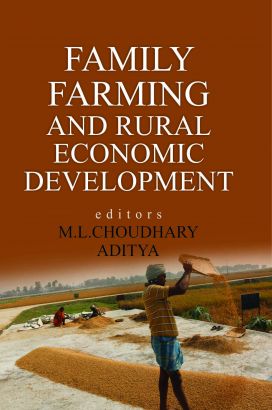
Family Farming and Rural Economic Development
Family Farming and Rural Economic Development
Regular price
$86.91 USD
Regular price
$144.85 USD
Sale price
$86.91 USD
Unit price
/
per
Couldn't load pickup availability
Author : M.L.Choudhary & Aditya
Pages : 438
Year of Publication : 2015
Language : English
Binding : Hardback
Family farming is a prevalent form of agriculture in both developed and developing countries, encompassing all family-based agricultural activities and being closely connected to various aspects of rural and social development. It is recognized as an organization of agricultural, forestry, fisheries, pastoral, and aquaculture production that is managed and operated by a family and increasingly reliant on family labor, both from men and women. In developing countries such as India, several factors are essential for the successful development of family farming, including agro-ecological conditions and territorial characteristics, access to markets, policy environment, access to land and natural resources, access to technology and extension services, access to finance, demographic, economic, and socio-cultural conditions, and the availability of specialized education. The International Year of Family Farming was designated by the United Nations General Assembly at its 66th session, acknowledging the growing role of family farming in poverty reduction and rural development. The book offers a wide range of topics that address crucial issues for individuals in the agriculture industry, researchers, faculty, and others.
Pages : 438
Year of Publication : 2015
Language : English
Binding : Hardback
Family farming is a prevalent form of agriculture in both developed and developing countries, encompassing all family-based agricultural activities and being closely connected to various aspects of rural and social development. It is recognized as an organization of agricultural, forestry, fisheries, pastoral, and aquaculture production that is managed and operated by a family and increasingly reliant on family labor, both from men and women. In developing countries such as India, several factors are essential for the successful development of family farming, including agro-ecological conditions and territorial characteristics, access to markets, policy environment, access to land and natural resources, access to technology and extension services, access to finance, demographic, economic, and socio-cultural conditions, and the availability of specialized education. The International Year of Family Farming was designated by the United Nations General Assembly at its 66th session, acknowledging the growing role of family farming in poverty reduction and rural development. The book offers a wide range of topics that address crucial issues for individuals in the agriculture industry, researchers, faculty, and others.
Share