1
/
of
1
Feeds and Fodders for Livestock and Poultry
Feeds and Fodders for Livestock and Poultry
Regular price
$58.58 USD
Regular price
$97.63 USD
Sale price
$58.58 USD
Unit price
/
per
Couldn't load pickup availability
Author : Bikas Chandra Debnath & Tapan Kumar Das
Pages : 208
Year of Publication : 2026
Language : English
Binding : Hardback
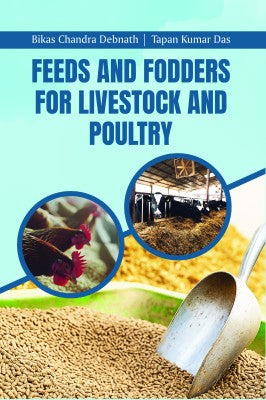
"Feeds and Fodders for Livestock and Poultry" is a comprehensive reference book that provides detailed information on the types, sources, and nutritional content of animal feeds and fodders in tropical regions. The book is aimed at farmers, animal husbandry practitioners, researchers, and students, focusing on the unique challenges and opportunities for feeding livestock and poultry in tropical climates. The book covers the following key aspects: Types of Feeds and Fodders: It explores the various types of feeds and fodders available in tropical regions, including both natural pastures and cultivated crops. It highlights the nutritional value of different feed ingredients and their suitability for different species of livestock and poultry. Forage Crops and Their Utilization: The book discusses a wide range of forage crops, such as legumes, grasses, and shrubs, which are grown in tropical areas. It explains their nutritional composition, growth patterns, and best practices for their cultivation and use in feeding animals. Nutritional Requirements: The book provides insights into the specific nutritional needs of livestock and poultry, taking into account the unique environmental and climatic conditions of tropical regions. It discusses protein, carbohydrate, fat, vitamin, and mineral requirements for various animal species. Alternative Feeds: Given the challenges faced in tropical regions, such as seasonal feed shortages, the book also covers alternative feed sources, including agro-industrial by-products, food waste, and other non-conventional feed ingredients. It emphasizes the importance of sustainable practices in feeding animals. Feeding during scarcity period: The book links nutrition to animal health during scarcity period. Preservation method: The book discusses practical feeding strategies using preservation techniques. Anti-nutritional factors and detoxification: This book covers different antinutritional factors present in feed and their utilization using different detoxification techniques. Overall, the book serves as a valuable guide for improving livestock and poultry production in tropical regions by providing scientific and practical knowledge about animal feeds and fodders. It promotes efficient feed use, sustainable agricultural practices, and improved animal performance, contributing to better food security in tropical countries.
Pages : 208
Year of Publication : 2026
Language : English
Binding : Hardback
"Feeds and Fodders for Livestock and Poultry" is a comprehensive reference book that provides detailed information on the types, sources, and nutritional content of animal feeds and fodders in tropical regions. The book is aimed at farmers, animal husbandry practitioners, researchers, and students, focusing on the unique challenges and opportunities for feeding livestock and poultry in tropical climates. The book covers the following key aspects: Types of Feeds and Fodders: It explores the various types of feeds and fodders available in tropical regions, including both natural pastures and cultivated crops. It highlights the nutritional value of different feed ingredients and their suitability for different species of livestock and poultry. Forage Crops and Their Utilization: The book discusses a wide range of forage crops, such as legumes, grasses, and shrubs, which are grown in tropical areas. It explains their nutritional composition, growth patterns, and best practices for their cultivation and use in feeding animals. Nutritional Requirements: The book provides insights into the specific nutritional needs of livestock and poultry, taking into account the unique environmental and climatic conditions of tropical regions. It discusses protein, carbohydrate, fat, vitamin, and mineral requirements for various animal species. Alternative Feeds: Given the challenges faced in tropical regions, such as seasonal feed shortages, the book also covers alternative feed sources, including agro-industrial by-products, food waste, and other non-conventional feed ingredients. It emphasizes the importance of sustainable practices in feeding animals. Feeding during scarcity period: The book links nutrition to animal health during scarcity period. Preservation method: The book discusses practical feeding strategies using preservation techniques. Anti-nutritional factors and detoxification: This book covers different antinutritional factors present in feed and their utilization using different detoxification techniques. Overall, the book serves as a valuable guide for improving livestock and poultry production in tropical regions by providing scientific and practical knowledge about animal feeds and fodders. It promotes efficient feed use, sustainable agricultural practices, and improved animal performance, contributing to better food security in tropical countries.
Share