1
/
of
1
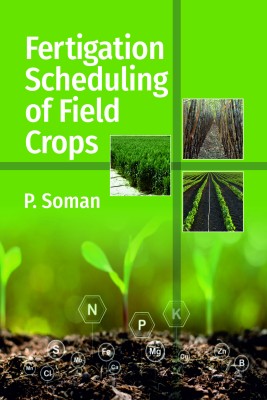
Fertigation Scheduling of Field Crops
Fertigation Scheduling of Field Crops
Regular price
$91.68 USD
Regular price
$152.80 USD
Sale price
$91.68 USD
Unit price
/
per
Couldn't load pickup availability
Author : P. Soman
Pages : 102
Year of Publication : 2022
Language : English
Binding : Hardback
Scheduling involves determining the appropriate amounts and timing of nutrient application for crops. The recommended doses (RD) of NPK, which are provided by relevant public institutions or state agriculture universities, serve as the basis for creating these schedules. These schedules are tailored to match the growth and developmental stages of each specific crop. In order to accommodate regions or countries where different RD practices are employed, the book offers information on basic nutrient split ratios for each growth stage duration. These ratios help allocate fertilizers for each stage of the crop's development. The fertilizers are then converted into daily doses that are practical for farmers to use. However, the schedule is not presented on a daily basis because most farmers prefer not to use daily dosing (injection). Instead, the schedule is given as a dose every three days, as this frequency has been found to provide better yield and nutrient use efficiency. The schedules provided in this book have been field-tested and used by farmers for several seasons.
Pages : 102
Year of Publication : 2022
Language : English
Binding : Hardback
Scheduling involves determining the appropriate amounts and timing of nutrient application for crops. The recommended doses (RD) of NPK, which are provided by relevant public institutions or state agriculture universities, serve as the basis for creating these schedules. These schedules are tailored to match the growth and developmental stages of each specific crop. In order to accommodate regions or countries where different RD practices are employed, the book offers information on basic nutrient split ratios for each growth stage duration. These ratios help allocate fertilizers for each stage of the crop's development. The fertilizers are then converted into daily doses that are practical for farmers to use. However, the schedule is not presented on a daily basis because most farmers prefer not to use daily dosing (injection). Instead, the schedule is given as a dose every three days, as this frequency has been found to provide better yield and nutrient use efficiency. The schedules provided in this book have been field-tested and used by farmers for several seasons.
Share