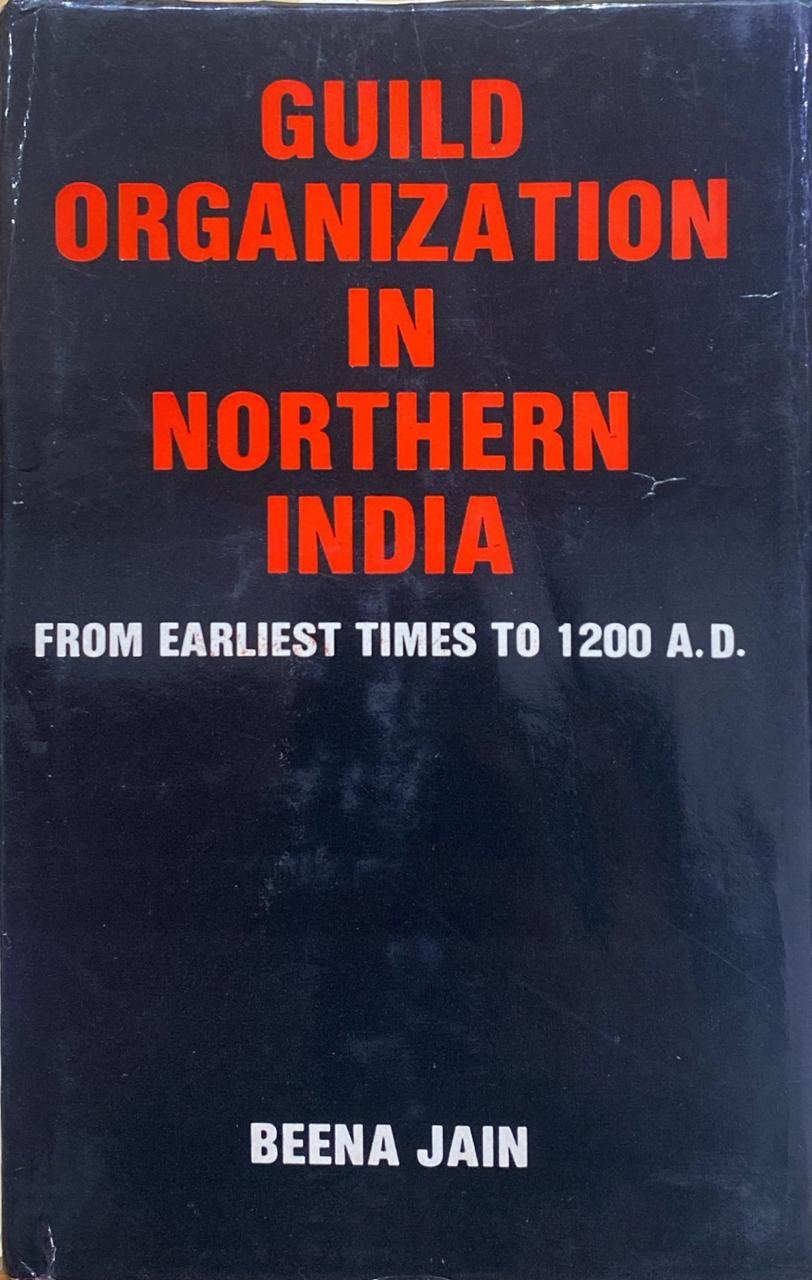
Guild Organization in Northern India (From Earliest Times to 1200 B.C.)
Guild Organization in Northern India (From Earliest Times to 1200 B.C.)
Hardcover
Couldn't load pickup availability
DETAILS :
- Author: Beena Jain
- Publisher: South Asia Books
- Publication date: 1 December 1990
- Language: English, Sanskrit
- ISBN-10: 8185268142
- ISBN-13: 978-8185268149
- Item Weight: 500 g
ABOUT THE BOOK
Guild Organization in Northern India: From Earliest Times to 1200 A.D. (frequently cited with the chronological scope extending to the early medieval era), authored by the meticulous historian Dr. Beena Jain, is a definitive socio-economic study of ancient Indian corporate life. Published by Pratibha Prakashan, this academic volume investigates the origin, structural consolidation, and eventual transformation of Shrenis (merchant and artisan guilds) in the northern territories of the Indian subcontinent. The core philosophy of this text is to demonstrate how these corporate entities acted as stabilizing institutions that preserved technical craftsmanship, regulated internal market mechanics, and maintained cultural continuity independent of shifting royal dynasties and political upheavals.
The narrative is structured around an exhaustive analysis of diverse source materials, cross-referencing veiled references in early Vedic literature, Buddhist Jataka tales, Maurya-era administrative texts like the Arthashastra, and formal legal codes within the Dharmashastras. Dr. Jain methodically tracks how simple associations of craftsmen evolved into highly complex corporate bodies possessing their own judicial courts, administrative assemblies, and executive officers. The book heavily details the versatile institutional profile of the guilds, analyzing their functions not just as trade regulators, but as autonomous banking institutions that accepted permanent religious endowments (Akshayanivi), issued loans, and minted localized civic coinage. By looking at epigraphic and numismatic seals, the volume provides a clear look at how these guilds navigated complex relationships with sovereign kings, balancing their judicial autonomy against the overarching legal structures of the state.
ABOUT THE AUTHOR
Dr. Beena Jain is an elite Indian historian, researcher, and archivist specializing in the ancient economic systems, institutional history, and cultural jurisprudence of South Asia. Known for her rigorous archival balance, her scholarly career has been centered on interpreting cryptic Sanskrit and Prakrit epigraphs to reconstruct the daily material realities of the classical Indian world.
Dr. Jain’s analytical style is exceptionally methodical, objective, and deeply rooted in historical data. Writing as a peer to serious researchers of Indology, she avoids romanticized generalizations about ancient prosperity, choosing instead to dismantle the precise organizational networks, apprentice-master frameworks, and risk-management strategies that allowed merchant bodies to flourish. By translating dense scriptural edicts into accessible academic prose and detailing the exact economic factors that triggered the structural decline of guilds after the 6th century A.D., her literature stands as a critical reference standard for universities and researchers studying ancient economic history.
Share