1
/
of
1
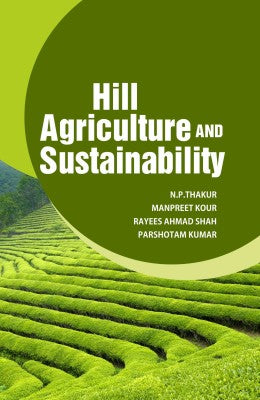
Hill Agriculture and Sustainability
Hill Agriculture and Sustainability
Regular price
$42.03 USD
Regular price
$70.05 USD
Sale price
$42.03 USD
Unit price
/
per
Couldn't load pickup availability
Author : N. P. Thankur, Manpreet Kour, Rayees Ahmad Shah & Parshotam Kumar
Pages : 70
Year of Publication : 2024
Language : English
Binding : Hardback
The Indian hilly regions are home to 51 million individuals, accounting for 18% of the geographical area and 6% of the country's population. Despite their significance, these regions are faced with developmental challenges and continuous pressure from both natural and human-induced stresses. However, the potential of these hills for economic growth, the development of the rural sector within the region, and their role in providing life-sustaining water and environmental services have attracted the attention of the government and other voluntary organizations. To promote sustainable development in these areas, it is crucial to maintain agro-biodiversity, adopt rainfed farming practices with major cropping systems such as maize-wheat, rice-wheat, and intercropped pulses and oilseeds in maize and wheat, and integrate livestock rearing as an integral part of mountain communities and nomadic tribes. Furthermore, technology, policy, and institutional interventions should be developed to address the specific needs of hill areas. Soil and moisture conservation technologies can be promoted by implementing water shed management, moisture conservation strategies, and water harvesting schemes. Additionally, the integration of cropping components with different farming system components can generate more income, increase profitability, and reduce dependence on external inputs. Horticulture components are one of the most promising enterprises in hill agriculture and can double farmers' income while also creating employment opportunities and utilizing family labor throughout the year. The laborers engaged in crop components can also take care of dairy, poultry, apiary, and mushroom cultivation, reducing production costs and increasing profitability. Overall, the development of the hilly regions requires a comprehensive approach that addresses both economic and environmental concerns.
Pages : 70
Year of Publication : 2024
Language : English
Binding : Hardback
The Indian hilly regions are home to 51 million individuals, accounting for 18% of the geographical area and 6% of the country's population. Despite their significance, these regions are faced with developmental challenges and continuous pressure from both natural and human-induced stresses. However, the potential of these hills for economic growth, the development of the rural sector within the region, and their role in providing life-sustaining water and environmental services have attracted the attention of the government and other voluntary organizations. To promote sustainable development in these areas, it is crucial to maintain agro-biodiversity, adopt rainfed farming practices with major cropping systems such as maize-wheat, rice-wheat, and intercropped pulses and oilseeds in maize and wheat, and integrate livestock rearing as an integral part of mountain communities and nomadic tribes. Furthermore, technology, policy, and institutional interventions should be developed to address the specific needs of hill areas. Soil and moisture conservation technologies can be promoted by implementing water shed management, moisture conservation strategies, and water harvesting schemes. Additionally, the integration of cropping components with different farming system components can generate more income, increase profitability, and reduce dependence on external inputs. Horticulture components are one of the most promising enterprises in hill agriculture and can double farmers' income while also creating employment opportunities and utilizing family labor throughout the year. The laborers engaged in crop components can also take care of dairy, poultry, apiary, and mushroom cultivation, reducing production costs and increasing profitability. Overall, the development of the hilly regions requires a comprehensive approach that addresses both economic and environmental concerns.
Share