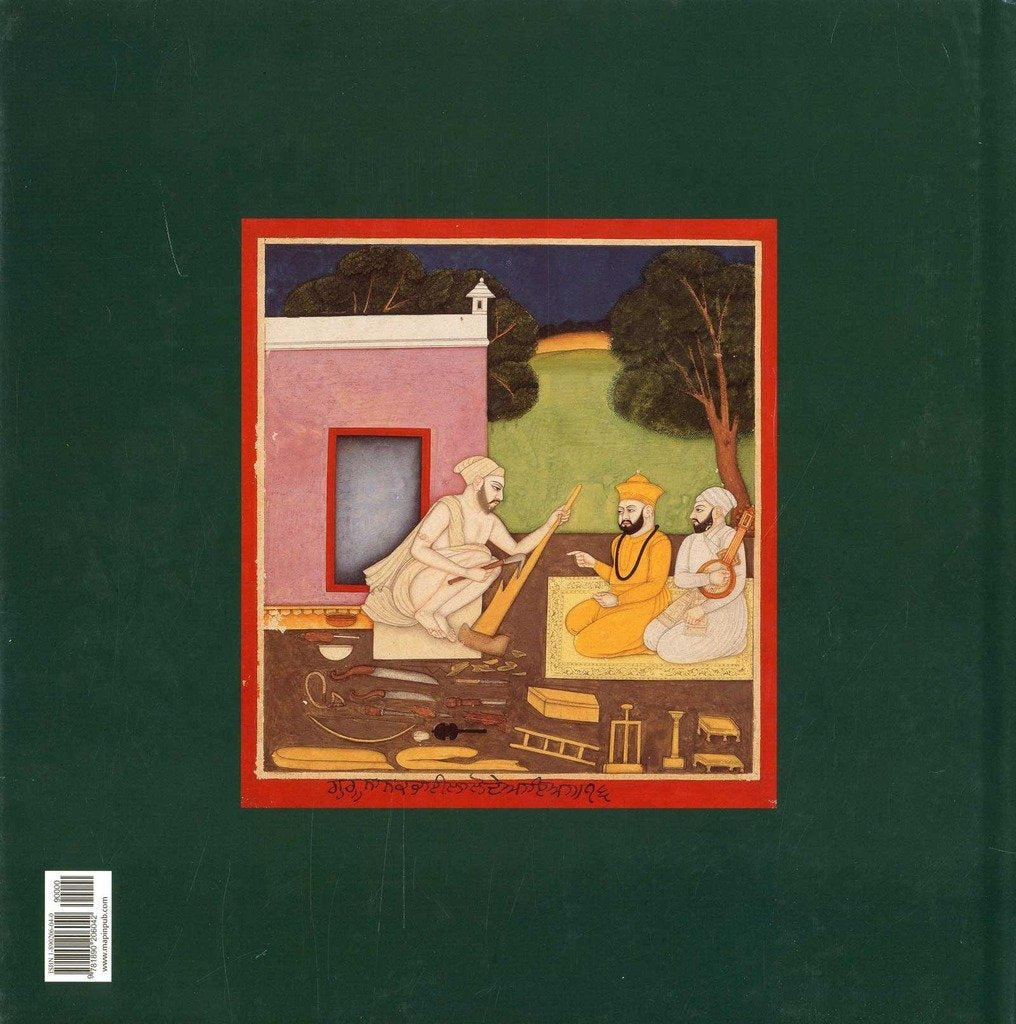
I See No Stranger
I See No Stranger
Hardcover
Couldn't load pickup availability
DETAILS :
- Author: by B.N. & Caron Smith Goswamy
- Publisher: Rubin Museum of Art
- Publication date: January 1, 2006
- Language: English
- ISBN-10: 8188204773
- ISBN-13: 978-8188204779
- Item Weight: 1800 G
ABOUT THE BOOK
I See No Stranger: Early Sikh Art and Devotion, co-authored by the legendary art historian Dr. B.N. Goswamy and Caron Smith, is a monumental, visually stunning art history masterwork. Published by the Rubin Museum of Art (in collaboration with Prestel Publishing), this volume serves as the definitive catalog for a landmark international exhibition. The core philosophy of this text centers on structural ecumenism and spiritual inclusivity—inspired by the famous verse of the Sikh saint Bhai Kanhiya, "I see no stranger, I see no enemy." Rather than treating Sikh art as a localized or insular cultural phenomenon, the authors systematically demonstrate how early Sikh visual culture absorbed, reflected, and elevated the diverse artistic idioms of the Mughal courts, Sufi mysticism, and Hindu Pahari painting traditions.
The volume is structurally organized into a thematic and historical exploration of Sikh devotional art from the 16th through the 19th centuries, delivering an exhaustive analytical breakdown of:
- The Janamsakhi Traditions: Analyzing the rare, richly illustrated biographical manuscripts of Guru Nanak Dev Ji, tracing how painters used subtle geometric layouts and delicate color palettes to capture the Guru's mystical travels and interfaith dialogues.
- The Concept of the Word (Shabad): Exploring how the Guru Granth Sahib (the holy scripture) became the central focus of Sikh devotion, and how its physical installation and preservation influenced the structural layout of Sikh architectural and sacred spaces.
- The Visual Transformation under the Khalsa: Documenting the dramatic shifts in artistic patronage during the late 18th and 19th centuries, where the peaceful, meditative aesthetics of the early Gurus transitioned into the regal, martial splendor of Maharaja Ranjit Singh’s empire.
ABOUT THE AUTHOR
Dr. B.N. Goswamy (1933–2023) was an elite, world-renowned Indian art historian, Professor Emeritus of Art History at Panjab University, and a recipient of India's prestigious Padma Bhushan award. Globally celebrated for his pathbreaking methodology in decoding painter lineages (particularly in Pahari and miniature traditions), his scholarship fundamentally revolutionized how Indian art is categorized and interpreted.
Caron Smith is an elite American curator, art historian, and former Chief Curator at the Rubin Museum of Art, New York. Her extensive expertise lies in Asian art preservation, cross-cultural artistic exchanges, and designing world-class exhibition spaces.
The collective authorial and analytical style of this work is exceptionally elegant, precise, and deeply poetic. Writing with the deep cultural fluency of a master connoisseur, Dr. Goswamy strips away dry, detached Western academic frameworks to view the paintings through the authentic lenses of Rasa (aesthetic emotion) and Bhakti (devotion). Every miniature painting, manuscript leaf, and coin is accompanied by clean, detailed annotations detailing its provenance, structural composition, and hidden theological symbolism. By balancing strict historical accuracy with breathtaking visual arrays, their collaborative work remains an irreplaceable global gold standard for academic libraries, art historians, and collectors of South Asian art heritage.
Share