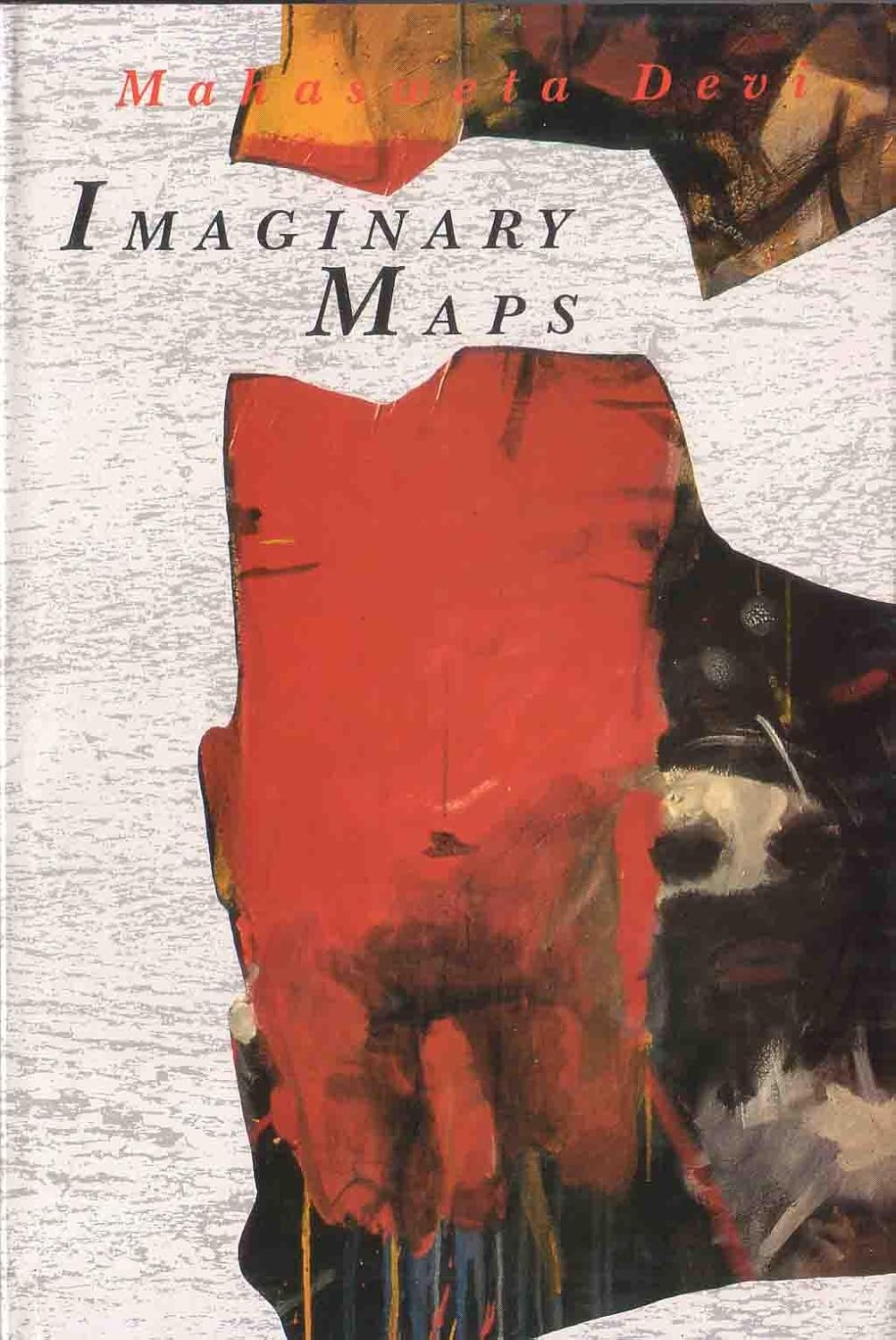
Imaginary Maps: Three Stories
Imaginary Maps: Three Stories
Hardcover
Couldn't load pickup availability
DETAILS :
- Author: Mahasweta Devi
- Translator: Gayatri Spivak
- Publisher: Routledge
- Publication date: 1 November 1994
- Edition: 1st
- Language: English
- Print length: 248 pages
- ISBN-10: 0415904633
- ISBN-13: 978-0415904636
- Item Weight: 400 g
ABOUT THE BOOK
Imaginary Maps: Three Stories, written by the towering Bengali activist-novelist Mahasweta Devi and translated with extensive critical commentary by the world-renowned postcolonial theorist Gayatri Chakravorty Spivak, is a foundational masterpiece of subaltern literature. First published globally by Routledge, this 213-page text occupies a unique space where creative fiction, deep structural sociology, and deconstructive philosophy converge. The core philosophy of this work is to expose the profound violence of mainstream development, decolonization, and late capitalism. Devi uses her narratives to map out how the modern nation-state routinely erases, exploits, and renders invisible India's indigenous tribal (Adivasi) populations, treating their sacred ancestral domains as blank spaces on an imaginary bureaucratic map.
The book is structured around an invaluable opening interview between the author and translator, followed by three devastating, conceptually linked stories that weave together history, local myth, and brutal political realities. The first story, "The Hunt", focuses on Mary Oraon, the fierce, outcast daughter of a tribal woman and a white planter, who transforms an ancient spring festival ritual into an act of concrete resistance against a corrupt mainstream timber merchant who attempts to exploit both her community's forests and her own body. The second narrative, "Douloti the Bountiful", is a crushing critique of the bonded labor system that tracks the tragic trajectory of a young tribal girl who must pay with her body for a tiny loan taken by her father, ultimately raising tens of thousands of rupees for her upper-caste masters before dying of tuberculosis. The final allegorical piece, "Pterodactyl, Pirtha, and Puran Sahay", details a drought-stricken tribal community visited by a prehistoric pterodactyl—perceived as the tormented soul of their ancestors crying out against impending cultural extinction—while a well-meaning mainstream journalist struggles to comprehend a reality completely detached from modern logic. Supplemented by Spivak’s masterful afterword, the collection forces readers to confront the stark socio-economic divides operating within postcolonial nations.
ABOUT THE AUTHOR
Mahasweta Devi was an elite Indian social activist, journalist, and author who remains one of the most powerful and influential voices in contemporary Bengali literature. Honored with India's highest literary accolades—including the Sahitya Akademi Award, the Jnanpith Award, and the Ramon Magsaysay Award—she spent decades living alongside and defending the civil rights of marginalized tribal communities like the Lodhas and Kherias across West Bengal, Bihar, and Madhya Pradesh.
Devi’s writing style is raw, uncompromising, and deeply documentary-driven. She consciously rejected polished, elitist literary aestheticism, choosing instead a gritty collage of colloquial dialects, state administrative records, and historical prose that pulses with controlled anger. Her monumental body of work—which includes landmark masterpieces like Hajar Churashir Maa and Aranyer Adhikar—cemented her legacy as a writer who weaponized her pen to give agency to the completely dispossessed.
Share