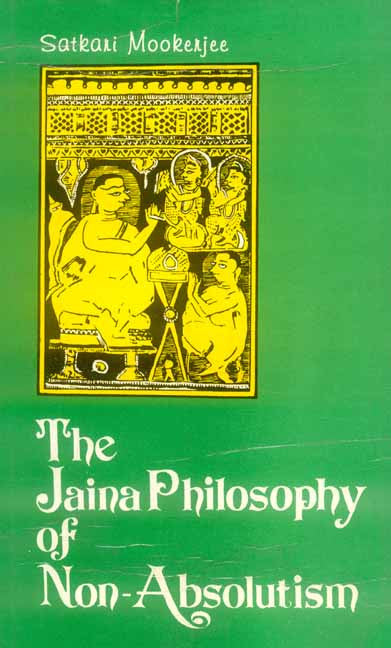
Jaina Philosophy of Non-Absolution: Critical Study of Anekantavada
Jaina Philosophy of Non-Absolution: Critical Study of Anekantavada
Hardcover
Couldn't load pickup availability
DETAILS :
- Author : Satkari Mookerjee
- Publisher : Motilal Banarsidass Publishers
- Publication date : 1 January 1995
- Language : English
- Hardcover : 308 pages
- ISBN-10 : 8120812921
- ISBN-13 : 978-8120812925
- Item Weight : 500 g
ABOUT THE BOOK
The Jaina Philosophy of Non-Absolutism is a seminal work that offers a rigorous philosophical and logical defense of Anekantavada, the hallmark of Jain thought. Written by the esteemed scholar Satkari Mookerjee, the book provides a "critical study" of the doctrine that reality is multifaceted and that no single point of view can claim to be the absolute truth. Mookerjee meticulously analyzes how the Jainas navigated the "middle path" between the radical pluralism of the Buddhists and the absolute monism of the Vedantins. By exploring the concept of Syadvada (the doctrine of "maybe" or "conditioned predication") and Nayavada (the theory of standpoints), the book demonstrates how Jainism provides a sophisticated framework for intellectual tolerance and the reconciliation of conflicting philosophical claims.
The text is particularly noted for its high level of academic precision, as it engages with the critiques posed by rival Indian philosophical schools. Mookerjee explains the Jain logic of the "Sevenfold Predication" (Sapta-bhangi-naya), showing how it is not a sign of skepticism, but a profound commitment to capturing the infinite complexity of existence. This work is considered one of the most authoritative English-language resources for understanding Jaina epistemology and its unique contribution to global logic and ethics. It remains a staple for anyone interested in the history of Indian logic and the philosophical foundations of non-violence (Ahimsa) as applied to thought.
ABOUT THE AUTHOR
Dr. Satkari Mookerjee was a towering figure in 20th-century Indian scholarship and served as the Director of the Nava Nalanda Mahavihara. He was a polyglot and a master of Sanskrit, Pali, and Prakrit, which allowed him to access primary sources with unparalleled depth. Mookerjee was known for his "comparative" approach, often placing Indian philosophical systems in dialogue with Western thought to highlight their logical strength. His writings are characterized by a rare blend of traditional learning and modern critical analysis, making him one of the few scholars who could bridge the gap between ancient "Pandit" scholarship and modern university academia.
Share