1
/
of
1
Laboratory Techniques for Fish Pathogen Detection
Laboratory Techniques for Fish Pathogen Detection
Regular price
$58.58 USD
Regular price
$97.63 USD
Sale price
$58.58 USD
Unit price
/
per
Couldn't load pickup availability
Author : Ridhdhisa R. Barad
Pages : 206
Year of Publication : 2026
Language : English
Binding : Hardback
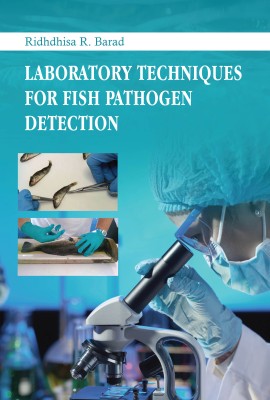
This book provides an extensive and practice-oriented overview of fish diseases, pathogen diagnostics, and laboratory techniques used in aquaculture health management. It is an essential resource for students, aquatic veterinarians, aquaculture professionals, researchers, and diagnostic laboratory personnel. Beginning with the classification of fish pathogens—bacterial, viral, fungal, parasitic, and non-infectious—the book emphasizes the importance of early disease diagnosis and biosafety practices. It offers detailed procedures for sample collection, preservation, and transportation, both from live and dead fish specimens. Core chapters explain bacterial culture methods, biochemical identification, hematological and histopathological analysis, and wet mount techniques. A major section is devoted to molecular diagnostics, including PCR, qPCR, ELISA, and DNA sequencing, along with field-level detection tools and diagnostic kits. It also addresses the interpretation of lab reports, outbreak mapping, and surveillance standards, guided by national (ICAR, MPEDA) and international (OIE/WOAH) protocols.
Pages : 206
Year of Publication : 2026
Language : English
Binding : Hardback
This book provides an extensive and practice-oriented overview of fish diseases, pathogen diagnostics, and laboratory techniques used in aquaculture health management. It is an essential resource for students, aquatic veterinarians, aquaculture professionals, researchers, and diagnostic laboratory personnel. Beginning with the classification of fish pathogens—bacterial, viral, fungal, parasitic, and non-infectious—the book emphasizes the importance of early disease diagnosis and biosafety practices. It offers detailed procedures for sample collection, preservation, and transportation, both from live and dead fish specimens. Core chapters explain bacterial culture methods, biochemical identification, hematological and histopathological analysis, and wet mount techniques. A major section is devoted to molecular diagnostics, including PCR, qPCR, ELISA, and DNA sequencing, along with field-level detection tools and diagnostic kits. It also addresses the interpretation of lab reports, outbreak mapping, and surveillance standards, guided by national (ICAR, MPEDA) and international (OIE/WOAH) protocols.
Share