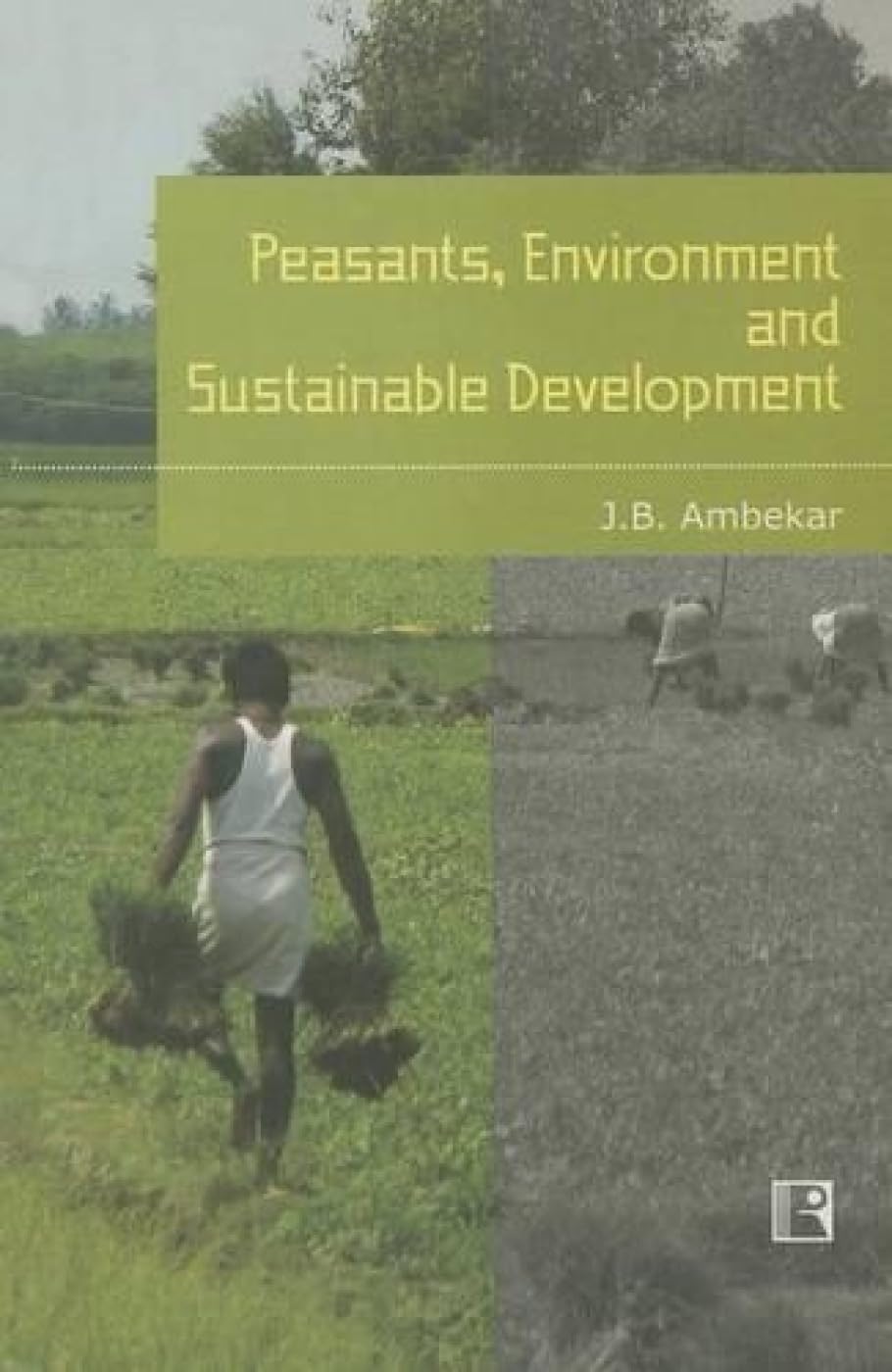
Peasants, Environment and Sustainable Development
Peasants, Environment and Sustainable Development
Hardcover
Couldn't load pickup availability
DETAILS :
- Author: l J.B. Ambekar
- Publisher: Rawat Publications
- Publication date: December 1, 2009
- Language: English
- Print length: 316 pages
- ISBN-10: 8131602966
- ISBN-13: 978-8131602966
- Item Weight: 550 g
ABOUT THE BOOK
Peasants, Environment and Sustainable Development, authored by the distinguished sociologist and anthropologist Dr. J.B. Ambekar, is a rigorous, field-driven academic masterwork. Published by Rawat Publications, a premier house for Indian sociological literature, this comprehensive volume explores the intricate, high-stakes relationship between agrarian communities, ecological systems, and developmental policy. The core philosophy of this text centers on structural socio-ecological interdependence. Dr. Ambekar treats peasants not merely as passive economic agents or agricultural laborers, but as active custodians of traditional ecological knowledge whose survival is deeply tied to the health of the natural environment.
The volume is structurally organized around extensive empirical case studies and ethnographic field research, primarily focusing on rural landscapes facing environmental transitions. The narrative moves systematically from theoretical definitions of sustainability to raw, village-level realities, providing an exhaustive analytical breakdown of:
- The Agrarian-Ecological Nexus: Analyzing how traditional peasant farming systems balance resource consumption with natural cycles, and how this equilibrium is disrupted by aggressive commercialization.
- Impact of Modernization: Evaluating the ecological fallout of the Green Revolution, including groundwater depletion, soil salinization, chemical contamination, and the loss of indigenous crop biodiversity.
- Socio-Economic Stratification: Mapping out how environmental degradation disproportionately impacts small, marginal peasants and tribal communities, fueling rural-to-urban distress migration.
- Sustainable Development Frameworks: Detailing viable alternatives rooted in participatory watershed management, organic farming, community forestry, and localized environmental governance.
ABOUT THE AUTHOR
Dr. J.B. Ambekar (Jayendra B. Ambekar) is an elite Indian sociologist, anthropologist, and retired professor who has spent decades researching rural development, caste dynamics, and environmental sociology in South Asia. He is widely recognized for his pioneering book Crop Cultivation and Peasantry and his dedication to structural, grassroots field methodologies.
Dr. Ambekar’s sociological and analytical style is extraordinarily meticulous, empathetic, and deeply objective. Writing with the clarity of a veteran field researcher, he seamlessly blends qualitative ethnographic interviews with quantitative ecological and economic indicators. The text completely avoids detached, abstract theories, ensuring every sociological concept is anchored by real-world data and village-level testimonies. By balancing deep structural critique with practical policy recommendations, his literature remains an indispensable national benchmark for research scholars, rural development officers, environmental policymakers, and UPSC civil services aspirants specializing in sociology and anthropology.
Share