1
/
of
1
Principles and Applications of Agricultural Meteorology
Principles and Applications of Agricultural Meteorology
Regular price
$69.45 USD
Regular price
$115.75 USD
Sale price
$69.45 USD
Unit price
/
per
Couldn't load pickup availability
Author : Alok Kumar Patra
Pages : 424
Year of Publication : 2016
Language : English
Binding : Hardback
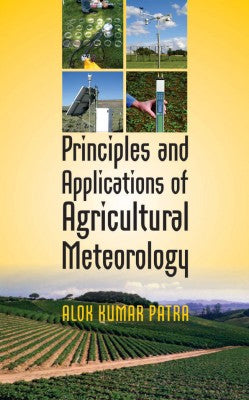
The relationship between weather and climate and their impact on agricultural activities is widely recognized as a crucial natural resource. As such, it is a fundamental input in agricultural planning. Agrometeorology, a specialized field of study, focuses on the interactions between meteorological, hydrological, and pedological factors that influence production systems in agriculture and related sectors, such as horticulture, animal husbandry, fishery, and forestry. The role of an agrometeorologist is to define these interactions, correlate physical environments with biological responses, and apply relevant meteorological skills to help farmers take advantage of favorable weather conditions and improve agricultural production in terms of both quality and quantity. This textbook is designed for undergraduate students in agriculture, horticulture, and forestry and is based on the syllabus for the course "Agricultural Meteorology." The book is divided into twenty-three chapters that cover all aspects of agrometeorology. Chapter 1 discusses the concepts, definition, importance, scope, history, and future needs of agrometeorology. Chapter 2 provides basic information about the atmosphere. Chapters 3 to 13 focus on weather parameters such as radiation, temperature, humidity, evaporation, fog and dew, pressure, wind, clouds, monsoon, and precipitation, and their significance in agriculture. Chapters 14 to 22 explore applied aspects of meteorology, including climatic hazards, agroclimatic classification, micrometeorology of crops, weather in relation to crop pests and diseases, weather in relation to animal production, climate change, weather forecasting, remote sensing, and crop simulation modeling. Finally, Chapter 23 describes the features of an agrometeorological observatory.
Pages : 424
Year of Publication : 2016
Language : English
Binding : Hardback
The relationship between weather and climate and their impact on agricultural activities is widely recognized as a crucial natural resource. As such, it is a fundamental input in agricultural planning. Agrometeorology, a specialized field of study, focuses on the interactions between meteorological, hydrological, and pedological factors that influence production systems in agriculture and related sectors, such as horticulture, animal husbandry, fishery, and forestry. The role of an agrometeorologist is to define these interactions, correlate physical environments with biological responses, and apply relevant meteorological skills to help farmers take advantage of favorable weather conditions and improve agricultural production in terms of both quality and quantity. This textbook is designed for undergraduate students in agriculture, horticulture, and forestry and is based on the syllabus for the course "Agricultural Meteorology." The book is divided into twenty-three chapters that cover all aspects of agrometeorology. Chapter 1 discusses the concepts, definition, importance, scope, history, and future needs of agrometeorology. Chapter 2 provides basic information about the atmosphere. Chapters 3 to 13 focus on weather parameters such as radiation, temperature, humidity, evaporation, fog and dew, pressure, wind, clouds, monsoon, and precipitation, and their significance in agriculture. Chapters 14 to 22 explore applied aspects of meteorology, including climatic hazards, agroclimatic classification, micrometeorology of crops, weather in relation to crop pests and diseases, weather in relation to animal production, climate change, weather forecasting, remote sensing, and crop simulation modeling. Finally, Chapter 23 describes the features of an agrometeorological observatory.
Share