1
/
of
1
Recent Advances in Crop Variety Identification using DNA Technology
Recent Advances in Crop Variety Identification using DNA Technology
Regular price
$92.62 USD
Regular price
$154.37 USD
Sale price
$92.62 USD
Unit price
/
per
Couldn't load pickup availability
Author : Shabir H. Wani, Asif B. Shikari, Gowhar Ali, Aflaq Hamid & Zahoor Ahmad Dar
Pages : 422
Year of Publication : 2025
Language : English
Binding : Hardback
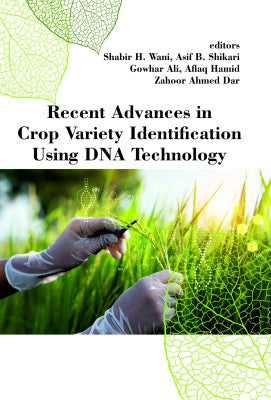
The book is aimed to describe the role of DNA fingerprinting for crop varietal identification. Application of various novel and innovative molecular tools for varietal identification and their advantage over the traditional methods that were based on morphological traits have been dealt in detail in this volume. This book provides an authoritative review account of different aspects and progress in the area of varietal identification in field and horticultural crops that has been made in the recent past. Book includes chapters prepared by specialists and subject experts on different aspects of crop varietal identification using state of the art molecular methodology. First chapter describes the foundations of crop variety identification whereas chapter 2-4 discuss the various types of genotyping techniques and advances in molecular marker technology for efficient DNA fingerprinting. Fifth chapter throws light on DNA barcoding for crop variety identification. Sixth chapter deals with the role of DNA barcoding in identification of plant pathogens for disease diagnostics. Seventh chapter deals with the Multi-locus profiling for genetic diversity studies. Eighth chapter highlights the CRISPR-based technologies for crop identification. Ninth and tenth chapters are unravelling the scope of bioinformatics and statistical tools for crop variety identification. Eleventh chapter focuses on the role of DNA Technology in seed purity testing. Chapter 12-18 discuss the application of DNA fingerprinting technology in varietal identification in cereals, pulses, oilseeds and horticultural crops. Further the chapter 19-21 discuss the challenges and future directions of DNA fingerprinting. The book provides state-of-the-art information on DNA fingerprinting using modern molecular marker technology and its advantage over the traditional techniques. The book will be highly useful for students, research scholars and scientists working in the in the area of crop improvement and allied subjects at Universities, Research institutes, R&Ds of Agricultural MNC's for conducting research and various Funding Agencies for planning future strategies.
Pages : 422
Year of Publication : 2025
Language : English
Binding : Hardback
The book is aimed to describe the role of DNA fingerprinting for crop varietal identification. Application of various novel and innovative molecular tools for varietal identification and their advantage over the traditional methods that were based on morphological traits have been dealt in detail in this volume. This book provides an authoritative review account of different aspects and progress in the area of varietal identification in field and horticultural crops that has been made in the recent past. Book includes chapters prepared by specialists and subject experts on different aspects of crop varietal identification using state of the art molecular methodology. First chapter describes the foundations of crop variety identification whereas chapter 2-4 discuss the various types of genotyping techniques and advances in molecular marker technology for efficient DNA fingerprinting. Fifth chapter throws light on DNA barcoding for crop variety identification. Sixth chapter deals with the role of DNA barcoding in identification of plant pathogens for disease diagnostics. Seventh chapter deals with the Multi-locus profiling for genetic diversity studies. Eighth chapter highlights the CRISPR-based technologies for crop identification. Ninth and tenth chapters are unravelling the scope of bioinformatics and statistical tools for crop variety identification. Eleventh chapter focuses on the role of DNA Technology in seed purity testing. Chapter 12-18 discuss the application of DNA fingerprinting technology in varietal identification in cereals, pulses, oilseeds and horticultural crops. Further the chapter 19-21 discuss the challenges and future directions of DNA fingerprinting. The book provides state-of-the-art information on DNA fingerprinting using modern molecular marker technology and its advantage over the traditional techniques. The book will be highly useful for students, research scholars and scientists working in the in the area of crop improvement and allied subjects at Universities, Research institutes, R&Ds of Agricultural MNC's for conducting research and various Funding Agencies for planning future strategies.
Share