1
/
of
1
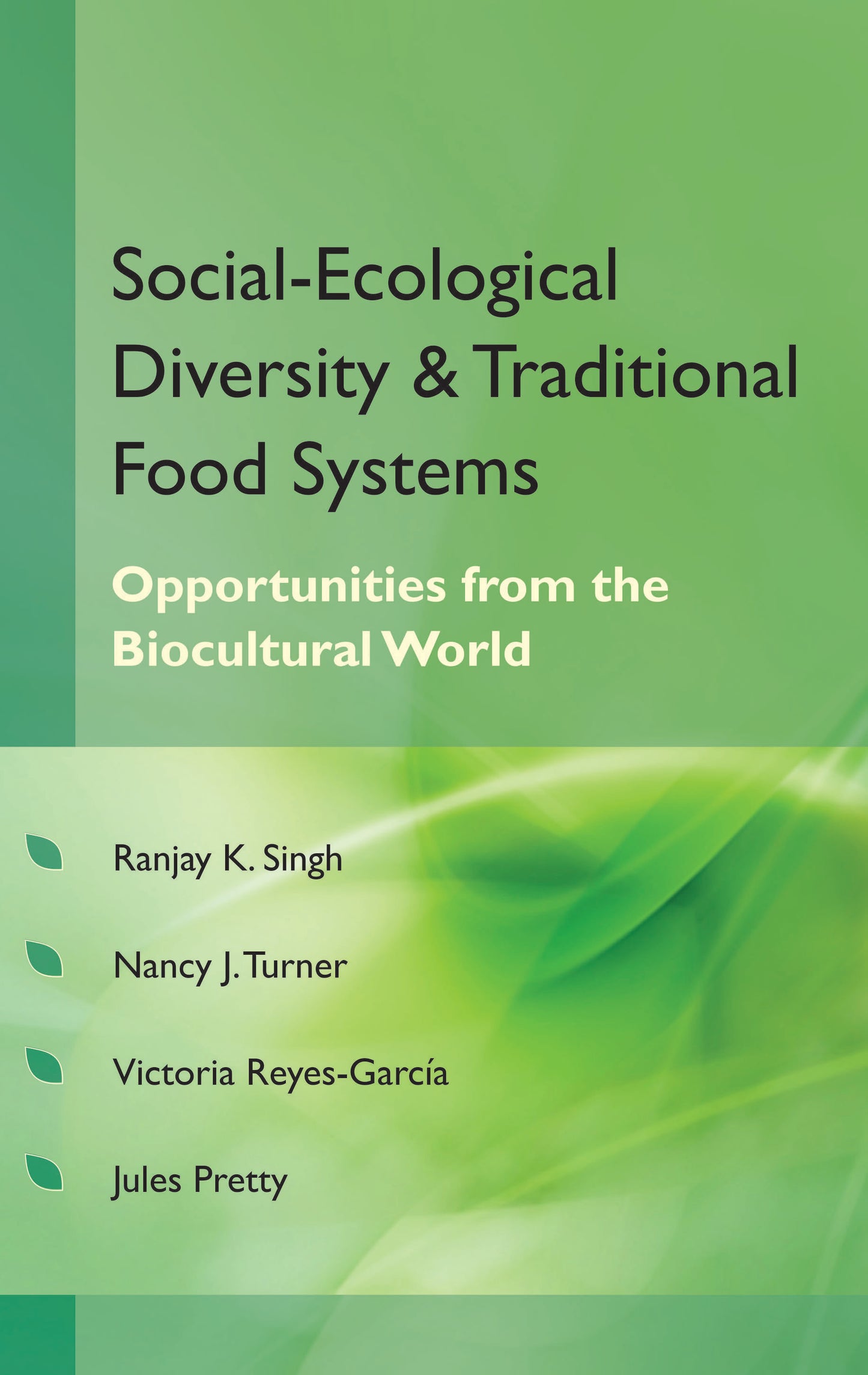
Social Ecological Diversity and Traditional Food Systems
Social Ecological Diversity and Traditional Food Systems
Regular price
$111.55 USD
Regular price
$185.92 USD
Sale price
$111.55 USD
Unit price
/
per
Couldn't load pickup availability
Author : Ranjay Kumar Singh, Nancy J. Turner, Victoria Reyes-Garcia & Jules Pretty
Pages : 350
Year of Publication : 2014
Language : English
Binding : Hardback
The present book aims to provide insight into the interactions between communities and ecosystems, as well as the significance of traditional knowledge in preserving biocultural resources through community-based adaptations. By drawing on experiences and lessons from around the world, this publication is intended to benefit a range of readers, including researchers who study human-environment interactions and climate adaptation techniques, biodiversity conservationists, non-governmental organizations, policymakers, and educators. Specifically, it is designed to assist policymakers and organizations involved in the revitalization of local foods and community-based conservation and adaptation initiatives in various ecosystems. Additionally, it serves as a useful resource for educators who work with indigenous and local communities to develop location-specific adaptations to address multiple biotic and abiotic stressors.
Pages : 350
Year of Publication : 2014
Language : English
Binding : Hardback
The present book aims to provide insight into the interactions between communities and ecosystems, as well as the significance of traditional knowledge in preserving biocultural resources through community-based adaptations. By drawing on experiences and lessons from around the world, this publication is intended to benefit a range of readers, including researchers who study human-environment interactions and climate adaptation techniques, biodiversity conservationists, non-governmental organizations, policymakers, and educators. Specifically, it is designed to assist policymakers and organizations involved in the revitalization of local foods and community-based conservation and adaptation initiatives in various ecosystems. Additionally, it serves as a useful resource for educators who work with indigenous and local communities to develop location-specific adaptations to address multiple biotic and abiotic stressors.
Share