1
/
of
1
Soil Fertility and Nutrient Management in Horticulture
Soil Fertility and Nutrient Management in Horticulture
Regular price
$53.61 USD
Regular price
$89.35 USD
Sale price
$53.61 USD
Unit price
/
per
Couldn't load pickup availability
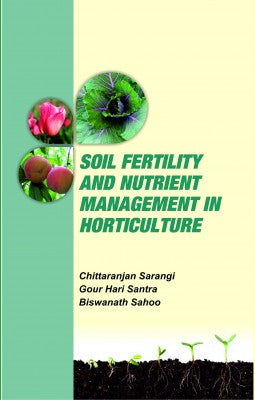
Author : Chittaranjan Sarangi, Gour Hari Santra & Biswanath Sahoo
Pages : 164
Year of Publication : 2018
Language : English
Binding : Hardback
This book is divided into two main sections: soil fertility and nutrient management as they apply to agriculture and horticulture. The first section addresses the plant nutrients and their role in the nutrition of horticultural crops, as well as their behavior in soil in terms of their availability. Additionally, the book discusses problems related to soil solution-reaction and salt content. All soil properties, excluding soil texture and depth (which are the two products of weathering), can be managed scientifically for profitable crop production while avoiding pollution. The second section provides guidance on how to manage these principles to sustain agricultural and horticultural production without harming the environment. This section is comprised of 20 chapters that are clearly explained with the help of pictures, figures, and tables for easy and comprehensive understanding. The book also includes suggestions for further readings at the end.
Pages : 164
Year of Publication : 2018
Language : English
Binding : Hardback
This book is divided into two main sections: soil fertility and nutrient management as they apply to agriculture and horticulture. The first section addresses the plant nutrients and their role in the nutrition of horticultural crops, as well as their behavior in soil in terms of their availability. Additionally, the book discusses problems related to soil solution-reaction and salt content. All soil properties, excluding soil texture and depth (which are the two products of weathering), can be managed scientifically for profitable crop production while avoiding pollution. The second section provides guidance on how to manage these principles to sustain agricultural and horticultural production without harming the environment. This section is comprised of 20 chapters that are clearly explained with the help of pictures, figures, and tables for easy and comprehensive understanding. The book also includes suggestions for further readings at the end.
Share