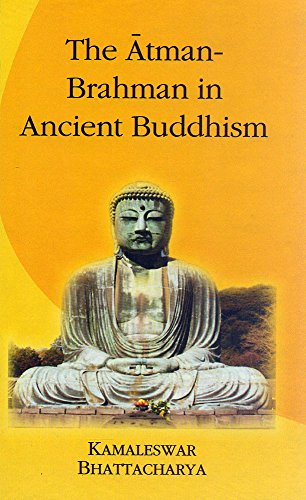
The Atman-Brahman in Ancient Buddhism
The Atman-Brahman in Ancient Buddhism
Couldn't load pickup availability
The thesis of this book is epoch-making. While no one doubts that the Buddha denied the atman, the self, the question is: Which atman? Buddhism, as understood in the modern era, has taken this to be the universal atman taught in the Hindu Upanisads, equivalent to brahman. What we find in the Buddha's words as recorded in the Buddhist scriptures, however, is only a denial of any permanent self in the ever-changing aggregates that form a person. In decades of teaching, the Buddha had many opportunities to clearly deny the impersonal universal atman if that was his intention. He did not do so.The most serious objection to Kamaleswar Bhattacharya's thesis that the Buddha did not deny the universal atman may be put in the form of this question: Why, then, did Buddhists down through the ages think he did? Reply: Actually, they did not think this, as far as we can tell from their writings that refute the atman and teach the anatman or no-self doctrine. The idea of the atman as the impersonal universal atman did not become dominant in India until some time after the eighth century C.E. Before then, throughout the Buddhist period, the dominant idea of the atman in India was that of a permanent personal atman. Judging from their writings, the Indian Buddhist teachers from Nagarjuna to Aryadeva to Asanga to Vasubandhu to Bhavya to Candrakirti to Dharmakirti to Santaraksita thought that the Buddha's anatman teaching was directed against a permanent personal atman.
Share