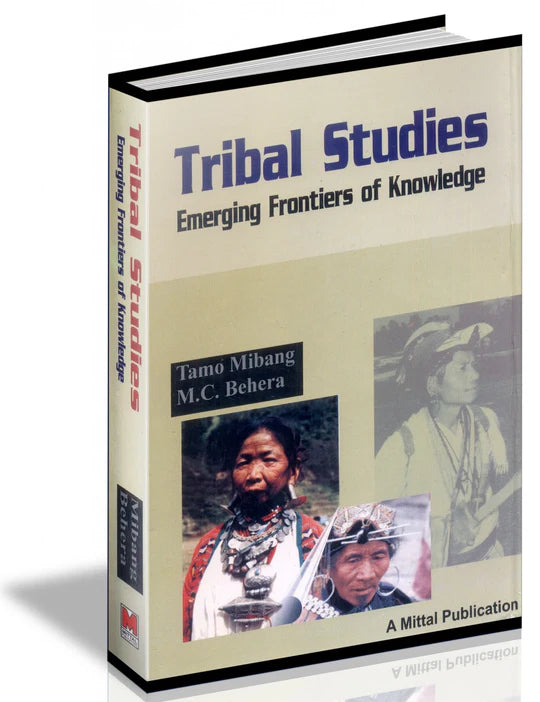
Tribal Studies by Tamo MIbang and M.C. Behera
Tribal Studies by Tamo MIbang and M.C. Behera
Hardcover
Couldn't load pickup availability
DETAILS :
- Author: Tamo MIbang and M.C. Behera
- Publisher: Mittal Publications
- Publication date: 1 January 2008
- Language: English
- Print length: 248 pages
- ISBN-10: 8183242154
- ISBN-13: 978-8183242158
- Item Weight: 500 g
ABOUT THE BOOK
Tribal Studies: Emerging Frontiers of Knowledge, edited by the late pioneering historian Prof. Tamo Mibang and the prominent developmental economist Prof. M. C. Behera, is a vital interdisciplinary anthology evaluating the changing cultural, economic, and political landscape of indigenous societies. Published by Mittal Publications in 2007, this academic volume serves as an essential core text for postgraduate research scholars in anthropology, sub-national sociology, and tribal administration across South Asian universities. The core philosophy of this text centers on the expansion of indigenous methodologies—arguing that tribal studies must move beyond old colonial, outsider-focused observations to adopt internal (emic) and multi-disciplinary approaches that center on identity preservation, legal rights, and self-determined development models.
ABOUT THE EDITORS
Prof. Tamo Mibang (1955–2022) was an elite Indian academician, administrator, and former Vice-Chancellor of Rajiv Gandhi University (RGU), Arunachal Pradesh. As a scholar from the Adi community, his extensive lifework at the Arunachal Institute of Tribal Studies (AITS) brought an authoritative, insider perspective to documenting oral literatures, traditional belief networks, and linguistic shifts. Co-editor Prof. M. C. Behera is a highly respected expert in tribal economics and rural development, with over sixteen edited volumes detailing how market expansion interacts with customary agrarian systems.
The editors' analytical approach is systematically thorough, collaborative, and policy-driven. They avoid romanticizing indigenous lifestyles as static relics of the past, focusing instead on the complex friction points between tradition and modern state-led development. The prose runs at a high academic level, utilizing continuous, deeply contextualized paragraphs rather than fragmented bulleted lists to link abstract sociological terms to grassroots realities like community forest rights, shifting cultivation (jhum), and regional tourism. By balancing deep respect for customary self-governing bodies (such as the Adi Kebang) with an objective view of modern economic changes, this book serves as an indispensable reference standard for university libraries, policy analysts, NGO directors, and administrative bureaus worldwide.
Share