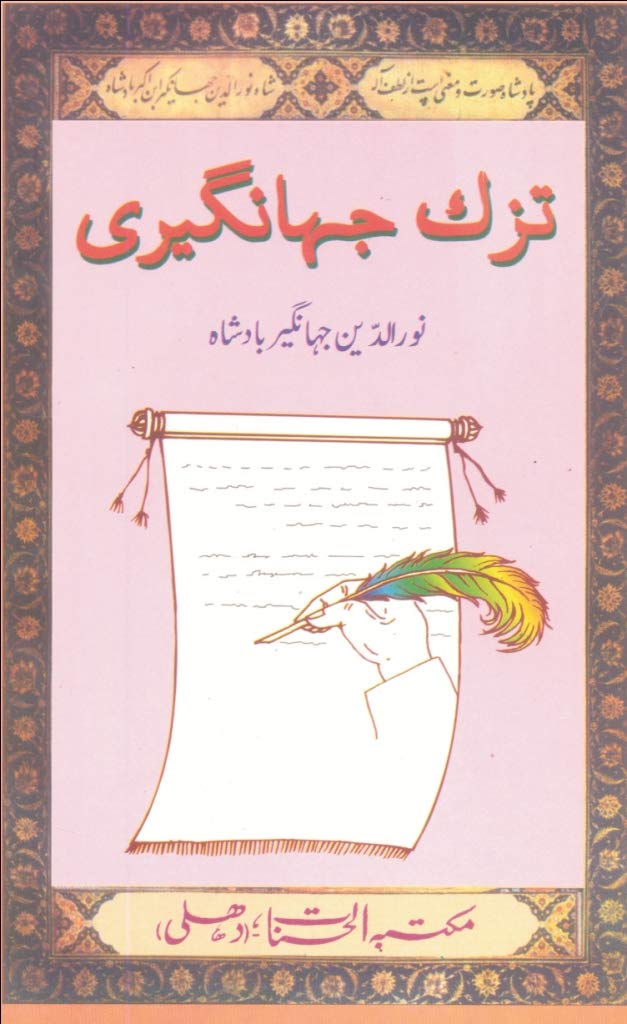
Tuzk-E-Jahangiri
Tuzk-E-Jahangiri
Hardcover
Couldn't load pickup availability
DETAILS :
- Author : Nooruddin Jahangir
- Publisher : Al Hasanat
- Publication date : 1 January 2013
- Language : Urdu
- ISBN-10 : 8186632654
- ISBN-13 : 978-8186632659
- Weight : 500 g
ABOUT THE BOOK
Tuzk-e-Jahangiri (also known as Jahangirnama) is the fascinating autobiography of the fourth Mughal Emperor, Nur-ud-din Muhammad Jahangir. Written in Persian, it is considered one of the most candid and detailed memoirs ever produced by a ruling monarch.
Unlike the more formal and idealized Akbarnama, Jahangir’s personal diary provides a raw and intimate look at his life and the Mughal Empire between 1605 and 1627. The book covers:
- Imperial Administration: His famous "Chain of Justice" (Zanjir-i-Adl) and his efforts to maintain the empire built by his father, Akbar.
- Nature and Science: Jahangir was a keen naturalist. He provides meticulous descriptions and sketches of exotic animals (like the dodo and zebra), birds, and flowers, often performing experiments to understand wildlife.
- Art and Aesthetics: His deep passion for Mughal miniature painting and architecture.
- Personal Reflections: He writes openly about his struggles with alcohol and opium, his deep love for his wife Nur Jahan, and his complex relationship with his sons.
- Sociology: Detailed observations of the customs, festivals, and religions of India during the 17th century.
ABOUT THE BOOK
Nur-ud-din Muhammad Jahangir (1569–1627) was the son of Emperor Akbar and the third ruler of the "Great Mughal" era. While he was a powerful emperor, he is best remembered as a "Prince of Artists."
Jahangir was a polymath who preferred the company of painters, poets, and philosophers over the rigors of the battlefield. His reign was marked by a period of relative stability, a flourishing of the arts, and the increasing influence of Empress Nur Jahan in state affairs. He was a man of contradictions—capable of extreme cruelty as a ruler, yet possessing a sensitive soul that found profound beauty in a single wildflower or a rare bird.
Share